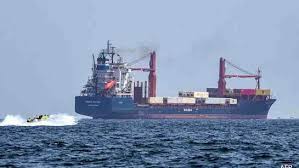
The reported imposition of a $2 million toll by Iran for ships traversing the Strait of Hormuz marks a staggering escalation in the ongoing maritime and economic warfare within the region. This move, characterized by Iranian lawmaker Alaeddin Boroujerdi with the blunt justification that “war has costs,” signals a fundamental shift in how one of the world’s most critical energy chokepoints is governed.
By transitioning from kinetic threats to a structured, albeit selective, “toll-gate” system, the Islamic Revolutionary Guard Corps (IRGC) is effectively weaponizing geography to offset the immense economic strain of the current conflict.
This “new sovereign regime,” as Boroujerdi describes it, represents the first time in nearly five decades that Iran has so explicitly monetized its physical control over the waterway, which typically facilitates the passage of approximately 20% of the world’s global oil and liquefied natural gas (LNG).
The financial burden of $2 million per vessel is a massive leap from standard maritime fees, reflecting a strategy of high-stakes leverage.
This policy appears to be part of a “selective blockade” where “friendly” nations—such as those with strong diplomatic or economic ties to Tehran—are granted safe passage upon payment and vetting, while vessels linked to the United States or Israel remain excluded or targeted.
For global shipping companies, these fees present a dual-layered crisis: the direct financial hit is compounded by the legal and ethical minefield of navigating international sanctions, which technically prohibit such transactions with Iranian state entities.
Furthermore, the insurance industry has reacted sharply, with premiums for Gulf transits skyrocketing as the risk of seizure or missile attack remains a constant deterrent for those who do not, or cannot, comply with the new registration system.
The timing of this announcement is particularly volatile, occurring amidst a 48-hour ultimatum from U.S. President Donald Trump, who threatened to “obliterate” Iranian power plants if the strait is not fully reopened.
In response, Iranian officials have doubled down, framing the toll as a legitimate exercise of “authority” and “strength” in the face of what they term Western aggression. This exchange has sent shockwaves through global energy markets, with oil prices hovering near $120 per barrel and natural gas futures experiencing extreme volatility.
While some ships from India, Pakistan, and China have reportedly successfully navigated this new “safe passage” protocol, the broader maritime community remains in a state of paralysis, with nearly 95% of usual traffic diverted or stalled.
This tactical pivot by Iran mimics the disruptive maritime strategies recently seen in the Red Sea, forcing a global audience to confront the reality that the “cost of war” is no longer just a military metric,
but a direct tax on the global supply chain. As the deadline looms, the Strait of Hormuz has evolved from a geographic asset into a primary frontline of global economic warfare, where the price of entry is now measured in millions of dollars and the risk of total regional conflagration.
About the Author