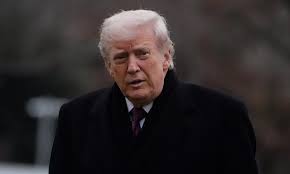
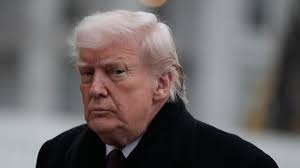
In a dramatic escalation of his administration’s “maximum pressure” campaign, President Donald Trump announced on December 16, 2025, a “total and complete blockade” of all sanctioned oil tankers entering and leaving Venezuela.
This move marks a historic shift in U.S. foreign policy toward the South American nation, transitioning from financial sanctions to direct military intervention. The catalyst for this development was the U.S. Navy’s seizure of a Venezuelan tanker on December 10, which was reportedly carrying approximately two million barrels of crude oil.
Justifying the blockade, Trump asserted that the Venezuelan government, led by Nicolás Maduro, is effectively a “terrorist organization” that uses oil wealth to fund “narcoterrorism, human trafficking, and murder.
” Central to Trump’s rhetoric is the demand that Venezuela pay for U.S. oil assets seized during the nationalization waves of the 1970s and, more significantly, under the presidency of Hugo Chávez in the late 2000s.
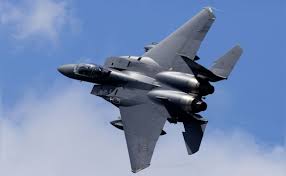
The President claimed that Venezuela had “stolen” American wealth, land, and energy rights, vowing that the U.S. naval armada—which he described as the largest ever assembled in the history of South America—would remain in place until these assets are returned or compensated for.
The historical grievance cited by the White House refers to the expropriation of multi-billion dollar projects once operated by American giants like ExxonMobil and ConocoPhillips.
While international arbitration panels have previously ordered Venezuela to pay billions in compensation—including a $1.6 billion award to Exxon and a massive $12 billion claim by ConocoPhillips—the Venezuelan government has largely defaulted on these obligations.
Trump’s domestic policy adviser, Stephen Miller, reinforced this stance by labeling the nationalization a “heist” of American ingenuity.
By linking these decades-old property disputes to current national security concerns, the administration is attempting to provide a legal and moral framework for what critics call a “piracy-style” seizure of resources.
The administration’s logic suggests that the “stolen” assets were used to build a “narco-state” that now threatens American borders with illegal drugs and violence. Consequently, the blockade is being framed not just as a tool for regime change, but as a debt-collection mission aimed at reclaiming “pillaged” American property.
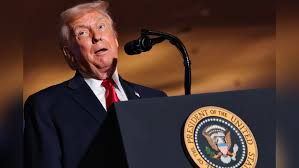
The international and domestic fallout from this announcement has been swift and polarizing. In Caracas, Vice President Delcy Rodríguez denounced the blockade as a “grotesque threat” and a violation of international law, accusing the U.S. of attempting to “appropriate the oil, land, and minerals of the country” through warmongering.
Geopolitically, the move has strained relations with China, which remains the primary buyer of Venezuelan crude via “shadow fleets” that use spoofing technology to hide their locations.
Military analysts warn that a “total blockade” is legally considered an act of war, a point echoed by U.S. Representative Joaquin Castro, who criticized the administration for bypassing Congressional approval.
However, the White House has clarified that the blockade specifically targets “sanctioned” vessels, a nuance that allows the U.S. to operate under the umbrella of existing executive orders. As the “Armada” grows and more tankers divert from Venezuelan waters to avoid seizure, the economic chokehold on Maduro’s regime is expected to reach an all-time high, potentially bringing the country’s oil exports to a complete standstill and further destabilizing the global energy market’s already volatile supply chains.
About the Author