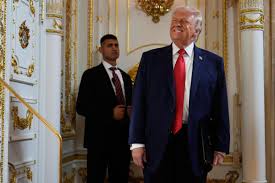
On January 16, 2026, during a ceremony renaming Florida’s Southern Boulevard to “Donald J. Trump Boulevard,” President Trump reiterated a bold claim that has become a cornerstone of his foreign policy narrative: that his direct intervention prevented a full-scale nuclear war between India and Pakistan in early 2025. Specifically, Trump asserted that Pakistan Prime Minister Shehbaz Sharif personally thanked him for saving “at least 10 million lives” by brokering a ceasefire during the height of the crisis.
This claim centers on the volatile period of May 2025, following the April Pahalgam terror attack in Jammu and Kashmir, which prompted India to launch Operation Sindoor, a series of high-intensity strikes against terror infrastructure inside Pakistan.
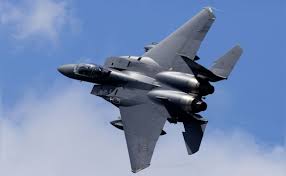
Trump’s narrative suggests that as the two nuclear-armed neighbors were “raging” and eight jets had already been shot down, his administration utilized aggressive trade leverage and direct diplomacy to force a “rapid order” resolution that others thought impossible.
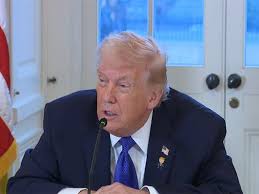
However, this “10 million lives” figure and the claim of mediation are met with significant factual disputes from New Delhi. While Trump maintains that his pressure was the decisive factor, the Indian government, led by Prime Minister Narendra Modi, has consistently and firmly rejected any third-party mediation. According to official Indian transcripts from June 2025,
Modi explicitly told Trump during a 35-minute phone call that the ceasefire was achieved through bilateral military channels (DGMO-to-DGMO) at Pakistan’s request, and that India would “never accept” external interference in its sovereign conflicts.
Despite these diplomatic rebuttals, Trump continues to frame the event as one of “eight peace deals” he secured in a single year—alongside a claimed resolution to the Gaza conflict—as part of a broader, public push for the Nobel Peace Prize.
The figure of “10 million” appears to be a rhetorical staple for Trump; he famously used the same number during his first term when discussing the potential casualties of a war in Afghanistan. In the current context of 2026, he uses this specific statistic to contrast his “deal-maker” approach with the perceived “warmongering” of his predecessors.
The narrative was further bolstered in early January 2026 when Venezuelan opposition leader and Nobel laureate Maria Corina Machado symbolically presented her own Nobel medal to Trump at the White House—a gesture the Norwegian Nobel Committee clarified was symbolic only, as the prize cannot be transferred.
Nevertheless, Trump’s insistence that the Pakistani Prime Minister credited him with saving 10 million people remains a potent tool in his “America First” diplomacy, even as the international community remains divided on whether the May 2025 ceasefire was a triumph of American pressure or a bilateral military necessity.
About the Author