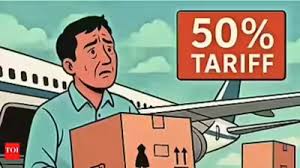
The sector most immediately and severely impacted by Mexico’s recently approved tariff hike—which levies duties of up to 50% on imports from non-Free Trade Agreement (FTA) countries, including India—is the Automobile Sector.
Mexico’s legislative move, which raises the import duty on passenger vehicles from the previous 20% to the full 50% for certain categories, directly targets India’s single largest export to the Latin American nation. India is a significant global exporter of vehicles, and Mexico ranks as its third-largest car export market after South Africa and Saudi Arabia.
This drastic increase in duty is expected to affect roughly $1 billion worth of annual Indian car shipments, primarily comprising compact and small-engine passenger vehicles from major manufacturers like Volkswagen Group, Hyundai Motor India, Nissan, and Maruti Suzuki. These Indian-made cars, which were competitively priced and catered to the entry-level segment of the Mexican market, will now become prohibitively expensive, making them largely unviable for sale.
The tariff increase, set to take effect from January 1, 2026, is part of a broader package aimed at protecting Mexico’s domestic industries—particularly against a surge of cheaper imports from China—and is also seen by analysts as a strategic effort to align with the United States ahead of the crucial review of the US-Mexico-Canada Agreement (USMCA).
While the tariffs cover a wide range of goods, including iron and steel (facing 35% to 40% duties), auto components (25% to 50%), and textiles, apparel, and footwear (30% to 35%), the direct jump to 50% on finished cars represents the most significant blow.
India’s Society of Indian Automobile Manufacturers (SIAM) had urgently lobbied the Indian government to intervene and secure a “status quo” on tariffs, arguing that Indian-origin vehicles constitute a small percentage of Mexico’s total sales and do not compete with the high-end vehicles manufactured locally.
Despite this, the tariff was approved, forcing Indian carmakers to immediately reassess their export strategies, either by finding alternative markets, absorbing a portion of the duty, or exploring costly, long-term options like establishing local assembly operations in Mexico to maintain market access. This development underscores the growing global trend of protectionism and highlights India’s vulnerability in key markets where it lacks a bilateral Free Trade Agreement.
About the Author