The persistent and recently escalating military clashes between Thailand and Cambodia along their shared border stem from a complex, century-old territorial dispute rooted in colonial-era maps, competing national identities, and the ownership of ancient Khmer temples.
The core of the problem lies in the Franco-Siamese treaties of 1904 and 1907, which defined the boundary between the Kingdom of Siam (Thailand) and French Indochina (which included Cambodia).
While the treaty intended for the border near the Dangrek Mountains to follow the watershed line, the French surveyors produced maps that deviated from this principle in certain areas, leading to ambiguity that both nations have contested ever since.
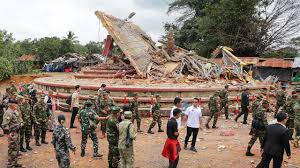
The most famous and volatile flashpoint of this dispute is the 11th-century Hindu temple, Preah Vihear (known as Phra Wihan in Thai), a stunning monument built during the Khmer Empire. Though the watershed line would naturally place the temple on the Thai side, the French map of 1907 placed it in Cambodian territory.
This dispute was taken to the International Court of Justice (ICJ), which ruled in favour of Cambodia in 1962, based on the principle that Siam had historically accepted the French map. However, the ruling did not fully demarcate the surrounding land, and the conflict reignited in 2008 when Cambodia successfully had the temple listed as a UNESCO World Heritage Site, which Thai nationalists strongly opposed as a surrender of sovereignty.
A subsequent ICJ ruling in 2013 clarified that the promontory on which the temple stands belongs to Cambodia, but the broader border remained contested, leaving room for continued confrontation.
Beyond Preah Vihear, other contested areas around ancient Khmer temples like Prasat Ta Muen Thom and Prasat Ta Krabey have also become hotspots.
The conflict has consistently been inflamed by nationalist sentiment on both sides, with politicians and military figures often framing the disputes as crucial tests of national sovereignty and the defense of territorial integrity.
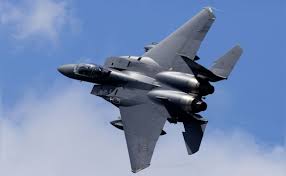
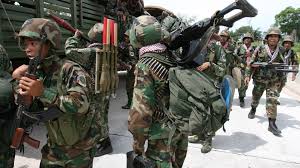
Recent escalations in 2025, which saw intense fighting, the use of heavy artillery, and Thai airstrikes—followed by the collapse of a ceasefire deal brokered by international parties—highlight that the issue is far from resolved.
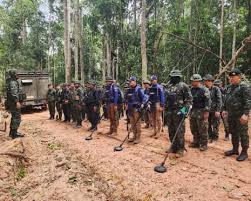
Thailand and Cambodia continue to accuse each other of provocation, including the laying of new landmines, demonstrating that without a complete and jointly accepted demarcation of the entire 800-km border, the dispute will likely continue to simmer and periodically erupt into armed conflict, forcing the mass displacement of civilians and destabilising the region.
About the Author