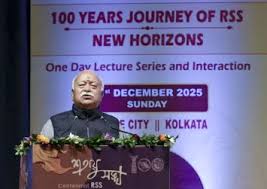
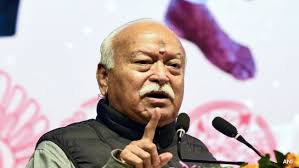
The statement made by Rashtriya Swayamsevak Sangh (RSS) Chief Mohan Bhagwat on December 21, 2025, in Kolkata, marks a definitive moment in the organization’s centenary celebrations, asserting that. Addressing the “100 Vyakhyan Mala” program, Bhagwat employed a striking analogy to illustrate his point, comparing the nation’s identity to the laws of nature by asking,
“The Sun rises in the east; we don’t know when this has been happening. So, do we need constitutional approval for that too?” This rhetoric underscores a core RSS philosophy: that “Hindu Rashtra” is not a political goal to be achieved through legislative amendments, but an existing, organic, and cultural “truth” that predates the modern state.
Bhagwat’s definition of a “Hindu” in this context is notably expansive and civilizational rather than strictly religious; he posits that anyone who considers India their motherland, values its diverse
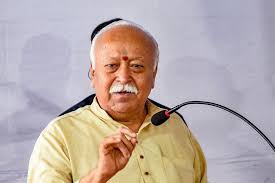
cultural heritage, and cherishes the legacy of their ancestors, is, by definition, a Hindu. By shifting the focus from religious rituals to a sense of belonging and “Indianness,” the RSS chief attempted to frame the Hindu identity as an all-encompassing attribute of the land’s inhabitants, regardless of their specific mode of worship.
He further clarified that while the Indian Constitution’s Preamble was amended in 1976 to include the word “secular,” the RSS remains indifferent to whether the term “Hindu” is ever formally added to the document by Parliament, as the organization believes the nation’s character is already immutable.
This stance, however, remains a point of deep ideological friction within India’s pluralistic society, as legal experts and opposition leaders frequently point out that the Constitution of India defines the nation as a Sovereign Socialist Secular Democratic Republic, where no single religion or cultural identity holds legal primacy.
Bhagwat’s remarks were also carefully calibrated to address long-standing criticisms of the RSS; he urged the public to visit the organization’s “shakhas” (branches) to dispel the “false perception” that the RSS is anti-Muslim.
He argued that the Sangh is a “staunch nationalist” body dedicated to the protection of Hindus rather than the opposition of others, and he specifically warned against viewing the RSS through the “political lens” of the Bharatiya Janata Party (BJP), calling such a comparison a “big mistake.
” Even as he advocated for the unity of Hindu society as the key to national development and “ego management,” he touched upon modern social issues, criticizing live-in relationships as a lack of responsibility and emphasizing the importance of the family unit in preserving social traditions.
Ultimately, the assertion that “no constitutional approval is needed” for India to be a Hindu nation serves to bypass the legal hurdles of constitutional change, instead aiming for a social transformation where the RSS’s version of cultural nationalism becomes the default public consciousness as the organization enters its second century of existence.
About the Author