
The settlement reached by the City of Seattle on February 11, 2026, marks the legal conclusion to one of the most emotionally charged and internationally scrutinized police-related wrongful death cases in recent years.
More than three years after Jaahnavi Kandula, a 23-year-old graduate student from Andhra Pradesh, was fatally struck by a police cruiser, the city has agreed to pay her family $29 million (approximately ₹262 crore).
This settlement resolves a $110 million lawsuit filed in 2024, with roughly $20 million covered by the city’s insurance and the remaining $9 million paid directly by the municipality. While the financial figure is historic, it is the context of the tragedy—defined by a reckless disregard for safety and a staggering lack of empathy—that continues to resonate most deeply.
The Incident and the Aftermath
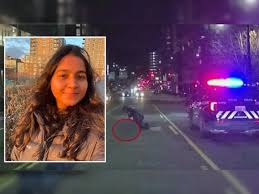
On the night of January 23, 2023, Jaahnavi was crossing a street near Northeastern University’s Seattle campus when she was hit by Officer Kevin Dave. Dave was responding to a high-priority overdose call and was traveling at a staggering 74 mph (119 kph) in a 25-mph zone. The impact was so severe that Jaahnavi was thrown nearly 100 feet.
While the officer had his lights on and was using his siren at intersections, the sheer speed in a pedestrian-heavy area led many to view the crash as entirely preventable. However, the legal road to “justice” was fraught with frustration for the Kandula family;
King County prosecutors eventually declined to file felony charges against Dave, citing a lack of evidence for “willful disregard.” He was instead cited for second-degree negligent driving, fined a mere $5,000, and later terminated from the force.
The “Limited Value” Controversy
The case transcended a local traffic accident and became a global diplomatic flashpoint due to leaked bodycam footage from another officer, Daniel Auderer, who was the vice president of the Seattle Police Officers Guild. In the footage, Auderer was heard laughing and downplaying the tragedy, remarking that Jaahnavi was a “regular person” and suggesting her life had “limited value.”
His cynical suggestion that the city should “just write a check” for $11,000 (roughly ₹9 lakh) because she was 26 and had “limited value” sparked massive protests in India and the U.S. and prompted a formal inquiry by the Indian government. Auderer was eventually fired in 2024 for these comments, which the department’s leadership admitted had caused “irreparable harm” to public trust.
A Search for Closure
The finalized ₹262 crore settlement is, in many ways, a literal fulfillment of Auderer’s cynical remark, but for the Kandula family, it represents the only form of accountability left in a system that failed to provide criminal consequences. City Attorney Erika Evans stated that the settlement was intended to provide a “measure of closure,” affirming that “Jaahnavi Kandula’s life mattered.”
Beyond the payout, the case has forced a radical re-evaluation of police pursuit and emergency response speeds in Seattle, alongside a posthumous Master’s degree awarded to Jaahnavi by her university. It serves as a somber reminder that while a legal “check” can be written, the human cost of negligence and the institutional impact of dehumanizing rhetoric leave scars that no amount of compensation can fully heal.
About the Author