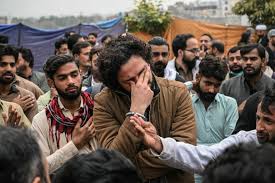
On Friday, February 6, 2026, a devastating suicide bombing targeted the Khadija Tul Kubra Mosque (also known as the Tarlai Imambargah) in the southeastern outskirts of Islamabad, Pakistan, leaving at least 31 people dead and 169 others injured.
The attack occurred during the height of Friday prayers, a time when the Shia religious centre was filled with worshippers. According to eyewitnesses and security officials, the assailant—believed to be a foreign national—initially attempted to force his way past the main entrance. When challenged by security guards, a brief exchange of gunfire ensued.
Despite the intervention, the bomber managed to breach the perimeter and detonated his explosive vest in the last row of the congregation. The sheer force of the blast shattered the windows of the three-story building, damaged nearby residential structures, and left the prayer hall in ruins, covered in debris and shards of glass.
Rescue operations were launched immediately, with Rescue 1122, the police, and paramilitary Rangers cordoning off the area. The injured, many in critical condition, were rushed to the Pakistan Institute of Medical Sciences (PIMS),
Polyclinic Hospital, and the Capital Development Authority (CDA) Hospital, where emergencies were declared to handle the overwhelming influx of casualties. Medical staff reported a desperate need for blood donations as surgeons worked around the clock to treat severe shrapnel wounds.
This tragedy is one of the deadliest sectarian attacks to hit the federal capital in years, especially notable as Islamabad is typically considered one of the most secure zones in the country. The timing of the blast was particularly sensitive, as it coincided with the state visit of Uzbekistan’s President Shavkat Mirziyoyev, who was in the city for official meetings just a few miles from the blast site.
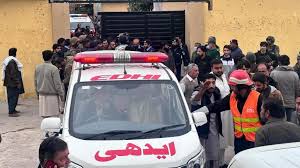
Political and religious leaders across the spectrum have condemned the act with profound severity. President Asif Ali Zardari described the bombing as a “crime against humanity,” while Prime Minister Shehbaz Sharif ordered a high-level investigation, vowing that the perpetrators would be brought to justice.
While no group immediately claimed responsibility, police sources and the Ministry of Interior pointed toward Fitna al-Khawarij (a term used by the Pakistani state for the outlawed Tehreek-e-Taliban Pakistan or TTP) as the likely orchestrators. The attack follows a broader surge in militant violence across Pakistan, including recent insurgent activities in Balochistan and previous bombings in the northwest.
Senate Opposition Leader Allama Raja Nasir Abbas and other Shia community leaders have called for a nationwide day of mourning and criticized the security lapse in the heart of the capital, demanding more robust protection for religious minorities. International observers, including the UK Ambassador and various UN agencies, have echoed these sentiments, calling the violence “abhorrent” and a direct assault on the freedom of worship.
About the Author