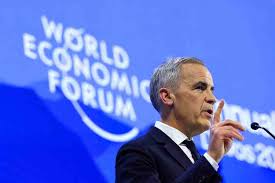
The recent diplomatic friction between Canadian Prime Minister Mark Carney and U.S. President Donald Trump centers on a fundamental disagreement over the future of the global order, which came to a head following Carney’s provocative speech at the World Economic Forum in Davos on January 21, 2026. In that address, Carney—a former central banker who recently transitioned to the premiership—delivered what many analysts called a “funeral oration” for the post-war rules-based international order. He argued that the world is currently experiencing a “rupture, not a transition,” wherein great powers have begun to use economic integration as a “weapon of coercion” and tariffs as “leverage.” Without naming the U.S. President directly, Carney’s critique of “American hegemony” and his call for “middle powers” to band together to avoid being “on the menu” was widely interpreted as a direct challenge to the Trump administration’s isolationist and protectionist “America First” policies.
The situation escalated quickly when President Trump retorted that “Canada lives because of the United States,” suggesting that Canada’s economic existence is entirely dependent on its southern neighbor. The rhetoric sharpened further as the White House threatened 100% tariffs on Canadian goods in response to Ottawa’s recent trade agreement with China involving agricultural products and electric vehicles. Trump even went so far as to rescind Canada’s invitation to the “Board of Peace,” a hallmark diplomatic initiative of his second term. In an attempt to de-escalate, or perhaps to state their positions clearly, the two leaders held a 30-minute phone call on January 26, 2026. However, the aftermath of that call has created a “he said, she said” narrative that further complicates the bilateral relationship.
The Conflicting Accounts of the Call
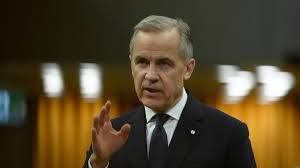
Following the conversation, U.S. Treasury Secretary Scott Bessent, who was present in the Oval Office during the call, told media outlets that Carney was “aggressively walking back” his Davos comments. According to the U.S. account, Carney sought to soothe the President’s irritation and emphasize Canada’s reliance on the North American market. However, on January 27, Prime Minister Carney flatly denied these claims while speaking to reporters in Ottawa. He stated firmly, “I meant what I said in Davos,” and insisted that he had clarified to the President that Canada was simply the first country to “understand” and adapt to the new reality of U.S. trade policy.
Canada’s Strategic Pivot
Carney’s refusal to retract his comments underscores a significant shift in Canadian foreign policy known as “Value-Based Realism.” Key pillars of this strategy include:
Trade Diversification: Reducing the 70% export dependency on the U.S. through new deals in Asia and Europe.
Sovereignty in the Arctic: Firmly asserting rights over northern waters and supporting Greenland’s right to self-determination, which has been a point of contention with the U.S.
USMCA (CUSMA) Review: Preparing for the upcoming 2026 review of the continental trade pact with a stance of “preparedness” rather than “subordination.”
By maintaining that “almost nothing is normal in the United States,” Carney is positioning Canada not as an antagonist, but as a realist leader among middle powers. This defiance has garnered him a standing ovation in Davos and domestic support for “standing up” to Washington, though it carries the high-stakes risk of a full-scale trade war. As the June 2026 USMCA review approaches, the tension between Carney’s globalist vision and Trump’s protectionist agenda will likely remain the defining feature of North American politics.
About the Author