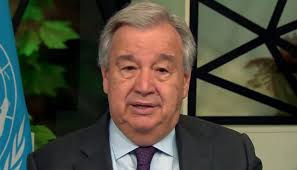
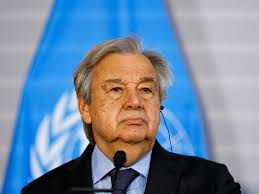
United Nations Secretary-General António Guterres has expressed profound alarm regarding the “possible intensification of instability” in Venezuela following the dramatic escalation of events in early January 2026. His concerns center on a sudden and unprecedented military intervention by the United States on January 3, 2026, known as Operation Absolute Resolve, which resulted in the capture of Nicolás Maduro and his transfer to New York to face federal criminal charges. Guterres has warned that this unilateral action not only threatens to plunge Venezuela into a new era of internal chaos but also sets a “dangerous precedent” that undermines the very foundation of international law and the UN Charter.
The Roots of Instability
The Secretary-General’s apprehension is rooted in the fear that removing a head of state by external force, regardless of the legality of their domestic rule, creates a power vacuum that could lead to a “wider and more destructive conflagration.” Before this military action, Venezuela had already endured years of debilitating political and economic turmoil. The 2024 presidential elections were a major turning point; the international community widely disputed the results, and the UN’s own Panel of Electoral Experts noted a lack of transparency after the government failed to release precinct-level tally sheets. This led to a period of “unprecedented repression” and a massive migration crisis, with over 8 million citizens fleeing the country by late 2025. Guterres fears that the current military intervention will exacerbate this humanitarian disaster rather than resolve it.
Regional and Legal Repercussions
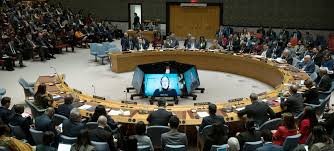
A primary concern for the UN chief is the regional impact. Neighboring countries like Colombia and Brazil have expressed fear that the destabilization of Venezuela could lead to increased border violence, a surge in refugees, and the potential for a broader conflict involving non-state armed groups. Furthermore, Guterres has been vocal about the erosion of the principle of non-intervention. In a statement delivered to the Security Council on January 5, 2026, he emphasized that the UN Charter explicitly prohibits the threat or use of force against the territorial integrity or political independence of any state. By bypassing the Security Council, the U.S. action is seen by the UN as a move toward a “might makes right” global order, which Guterres argues makes every nation less safe.
The Human Rights Dimension
The UN Independent International Fact-Finding Mission on Venezuela has also signaled a “grave concern” following the strikes. While the mission has documented crimes against humanity committed by the Maduro administration—including systematic torture and arbitrary detentions—it maintains that justice must be sought through established international legal frameworks, such as the International Criminal Court (ICC), rather than through unilateral military renditions. The Secretary-General is worried that the current “law enforcement” narrative used to justify the operation could be used to mask geopolitical or economic interests, particularly regarding Venezuela’s vast oil reserves.
A Call for Dialogue
In his appeal to the international community, Guterres has stressed that the only sustainable path forward is an inclusive and democratic dialogue. He urged all Venezuelan political actors to engage in a process that allows the Venezuelan people to determine their own future without external coercion. The UN has offered its “good offices” to facilitate such a transition, emphasizing that any new government must be grounded in the rule of law and the sovereign will of the people. As the Security Council remains deeply divided—with Russia and China condemning the “act of aggression” while some U.S. allies offer muted support—the Secretary-General continues to advocate for a return to multilateral diplomacy to prevent the crisis from spiraling into a long-term regional war.
About the Author