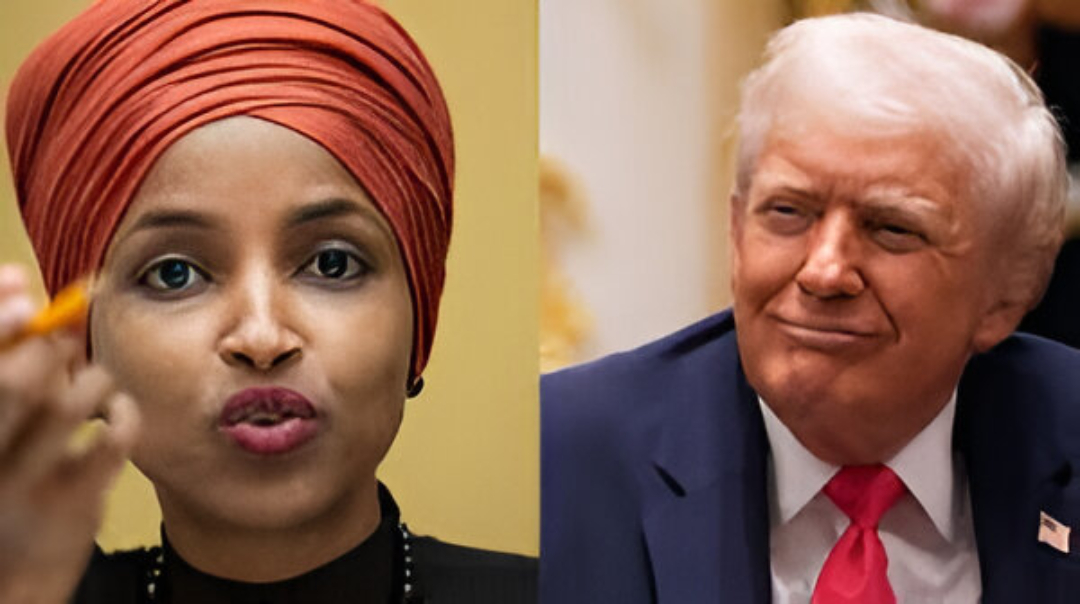
Donald Trump recently escalated his long-running verbal attacks against Congresswoman Ilhan Omar and the broader Somali immigrant community, demanding that she be “thrown the hell out” of the country,
while broadly characterizing migration from Somalia as originating from “hellholes.” During a series of public remarks and interviews, the President renewed and amplified the false, long-discredited conspiracy theory that Omar—a naturalized U.S.
citizen who arrived as a refugee from Somalia at age 12 and was elected to Congress in 2018—entered the U.S. illegally by marrying her brother for immigration purposes, an allegation she has consistently and categorically denied.
Trump’s tirade was not limited to Omar, as he went on to describe Somali immigrants as “garbage” who “contribute nothing” and “destroyed our country,” sentiments that were viewed by critics as overtly racist, xenophobic, and Islamophobic.
The comments were delivered amidst a broader push by the administration to tighten immigration enforcement, particularly in Minnesota, which is home to the largest Somali-American community in the United States.

These incendiary remarks immediately drew widespread condemnation from Democrats, civil rights organizations like the Council on American-Islamic Relations (CAIR), and even some local Republican leaders.
Congresswoman Omar herself responded to the attacks, calling Trump’s “obsession” with her “creepy and unhealthy,” and asserting that the President’s actions were a deliberate effort to deflect attention from his policy failures by stoking bigotry and division.
Omar further emphasized the significant, positive contributions of Somali-Americans in fields like medicine, education, and law enforcement, noting that the vast majority are American citizens by birth or naturalization.
Legal experts have affirmed that, as a naturalized U.S. citizen and sitting member of Congress, Omar cannot be deported unless the government proves in court that she committed deliberate fraud during her naturalization process, a high legal bar.
The incident serves as a stark example of the highly polarized rhetoric surrounding immigration in the current political climate, highlighting how the personal lives and heritage of prominent minority politicians are weaponized for political gain, simultaneously heightening fears and generating death threats against the communities they represent
About the Author