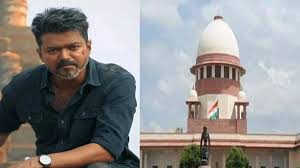
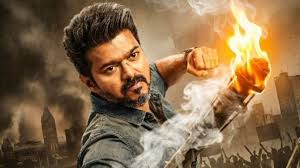
On January 15, 2026, the Supreme Court of India refused to provide immediate relief to the makers of the highly anticipated Tamil film Jana Nayagan, starring actor-turned-politician Vijay, effectively delaying the “swan song” of the superstar’s cinematic career. A division bench comprising Justice Dipankar Datta and Justice Augustine George Masih declined to entertain the Special Leave Petition (SLP) filed by KVN Productions, instead directing the filmmakers to return to the Madras High Court, where a hearing is already scheduled for January 20.
The apex court noted that the petitioners had approached them prematurely, bypassing the standard judicial process while a Division Bench of the High Court was already seized of the matter. Justice Datta notably commented on the “blistering pace” at which the initial proceedings had moved, observing that the single-judge bench had decided the matter within a day of filing, which he suggested did not allow the Central Board of Film Certification (CBFC) a fair opportunity to present its counter-arguments. This judicial setback means the film, which was originally slated for a massive Pongal release on January 9, will remain in a state of legal and financial limbo for at least another week.

The legal battle began when the CBFC Chairperson unilaterally referred Jana Nayagan to a Revising Committee on January 5, despite the film having already received a unanimous recommendation for a U/A 16+ certificate from the Examining Committee in December. The board cited a late-stage complaint alleging that certain scenes were “religiously offensive” and misrepresented the Indian Armed Forces.
The producers immediately challenged this in the Madras High Court, where Justice P.T. Asha initially ruled in their favor, setting aside the Chairperson’s referral and ordering the CBFC to issue the certificate forthwith. However, that order was stayed within hours by a Division Bench of the High Court following an urgent appeal by the CBFC, which argued that the single judge had overlooked procedural rules under the Cinematograph Act of 1952 and the updated 2024 Certification Rules.
In the Supreme Court today, Senior Advocate Mukul Rohatgi, representing KVN Productions, emphasized the “irreparable damage” caused by the delay, noting that the makers had already invested over ₹600 crore and booked more than 5,000 screens globally for the festive weekend. He argued that the CBFC’s last-minute hurdle was “mala fide” and designed to sabotage a project with immense cultural and political stakes.
The controversy has transcended the film industry, becoming a focal point of intense political debate in Tamil Nadu and beyond. Given that Jana Nayagan is marketed as Vijay’s final film before he transitions into full-time leadership of his new party, Tamilaga Vettri Kazhagam (TVK), many observers and political figures have alleged that the censorship delay is a state-sponsored attempt to stifle a powerful voice.
Tamil Nadu Chief Minister M.K. Stalin and Congress leader Rahul Gandhi have both criticized the union government’s handling of the situation, with Gandhi accusing the I&B Ministry of an “attack on Tamil culture.” Meanwhile, industry veterans like Kamal Haasan have called for a more transparent and time-bound certification process to protect the creative and economic interests of filmmakers.
As the case moves back to the Madras High Court for the January 20 hearing, the eyes of the nation remain on the judiciary to see if “The Torchbearer of Democracy” (as the film’s tagline suggests) will finally be allowed to reach its audience, or if the procedural “volte-face” of the censor board will successfully stall its release.
About the Author