As the current government moves to repeal the Mahatma Gandhi National Rural Employment Guarantee Act (MGNREGA) and replace it with a new framework, the Viksit Bharat—Guarantee for Rozgar and Ajeevika Mission (Gramin) (VB–G RAM G) Bill, 2025, it is crucial to recall the strong and highly critical stance taken by Prime Minister Narendra Modi regarding the scheme back in 2015.
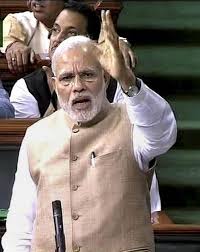
Speaking in the Lok Sabha on February 28, 2015, Modi delivered a blistering attack on the UPA-era flagship program, famously declaring that his government would not scrap MGNREGA but would keep it running as a “living monument to your failures”—a sarcastic barb aimed directly at the Congress party.
He mocked the scheme by pointing out that sixty years after Independence, the previous government was still asking the rural population to do menial work like “digging pits,” implying that the very existence of the scheme was evidence of Congress’s profound failure to alleviate poverty and create better employment opportunities over decades of rule.
Modi’s intent was not merely to criticize but to use the continuation of the scheme as a perpetual reminder of what he termed the “ruins” left behind by the previous administration. He stated with clear sarcasm, “My political sense tells me never to scrap MNREGA. Because MNREGA is a living memorial to your failures. Aur main gaaje-baaje ke saath iska dhol peet-ta rahoonga.” (And I will keep beating its drum with great pomp and show.)
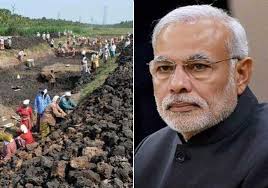
Despite this initial deep-seated criticism and the government’s subsequent efforts to re-orient its scope, the scheme’s relevance was reaffirmed by its role as a crucial safety net, particularly during the COVID-19 pandemic. However, the proposed VB-G RAM G Bill signals the government’s decisive shift away from the original philosophy.
While the new bill maintains a statutory guarantee of employment, increasing it from 100 to 125 days, it also introduces fundamental changes that address the very issues the government has long criticized, including the removal of Mahatma Gandhi’s name from the official Act title. Most significantly, the new framework alters the financial and operational structure:
it moves away from a purely demand-driven model to one where the Centre will determine a “normative allocation” of funds for each state, potentially shifting the burden of any over-expenditure onto state governments.
Furthermore, it introduces a clause allowing states to notify a 60-day pause in work during peak agricultural seasons to prevent labor shortages for farm work—a direct response to the long-standing complaint that MGNREGA inflated rural wages and pulled labor away from agriculture, an issue implicitly referenced in Modi’s 2015 criticism of the kind of work being offered.
The replacement thus represents not just a name change, but a complete strategic overhaul from what Modi once preserved as a “monument to failure” to a new scheme aligning rural employment with the ‘Viksit Bharat 2047’ vision, focusing on durable infrastructure and climate-resilient works.
About the Author