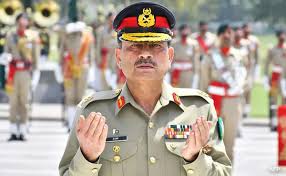
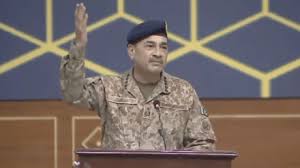
The claim by Field Marshal Asim Munir, Pakistan’s Chief of Defence Forces, regarding “divine help” during the 2025 military confrontation with India, represents a significant moment in the ideological narrative of the Pakistani military following the events of Operation Sindoor.
He explicitly stated, “We felt it,” while quoting the Quranic verse, “If Allah helps you, none can overcome you,” to suggest that supernatural support bolstered the nation’s defenses when confronted by a “numerically superior adversary.
” This rhetoric serves as a spiritual recalibration of the conflict’s outcome, which began on May 7, 2025, when India launched a series of high-precision missiles and air strikes targeting nine terror infrastructure sites across Pakistan and PoK.
The Indian operation was a retaliatory strike following the April 22 Pahalgam attack, where 26 civilians were killed; notably, the name “Sindoor” was chosen by Indian strategists to symbolize a resolute response to an attack that had “wiped away the vermilion” (sindoor) of grieving Indian families.
The conflict, which lasted until May 10, saw intense aerial engagements involving over 114 aircraft and the deployment of advanced systems like India’s BrahMos missiles and Rafale jets.
While Indian military briefings highlighted the successful destruction of terror camps at Noor Khan and Rahimyar Khan airbases using loitering munitions and SCALP missiles, Munir’s narrative focuses on Pakistan’s survival and “neutralization” of these threats as evidence of God’s favor.
By framing the military’s performance as a religious experience, Munir drew direct parallels between modern-day Pakistan and the original Islamic state established by the Prophet 1,400 years ago, emphasizing Pakistan’s “special status” as the only nuclear-armed Muslim nation and the self-appointed “protector of Haramain Sharifain” (Makkah and Madina).
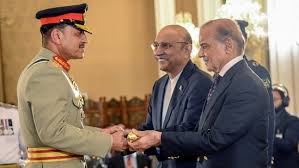
This civilizational framing is particularly potent in the domestic context of late 2025, as it coincides with the passage of the 27th Constitutional Amendment, which has significantly consolidated Munir’s power, making him perhaps the most influential military leader in decades.
Furthermore, the speech was not limited to India; it served as a dual-edged warning. Munir utilized the same platform to castigate the Afghan Taliban, demanding they choose between Pakistan and the Tehreek-e-Taliban Pakistan (TTP), alleging that 70% of militants infiltrating the border are Afghan nationals.
By intertwining the claim of “divine help” against India with a stern ultimatum to Kabul, the Field Marshal sought to project a sense of moral and military invincibility, even as his critics in the international community and Indian media pointed to the heavy losses sustained by Pakistani air defenses during the May skirmishes.
Ultimately, the “divine help” narrative serves to insulate the military establishment from internal scrutiny regarding the tactical setbacks of Operation Sindoor, instead presenting the standoff as a validated test of faith that ended in a spiritual victory for the Pakistani state
About the Author