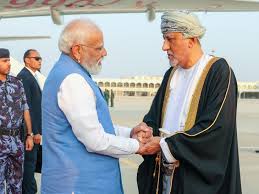
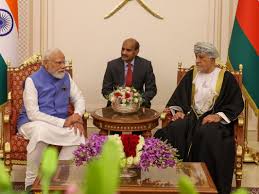
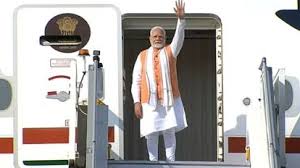
In a historic move to consolidate India’s strategic footprint in the Middle East, Prime Minister Narendra Modi arrived in Muscat, Oman, to oversee the signing of the Comprehensive Economic Partnership Agreement (CEPA) today, December 18, 2025.
This visit marks the final leg of the Prime Minister’s three-nation tour and coincides with the landmark 70th anniversary of diplomatic relations between the two countries.
The free trade agreement, which was formally approved by the Indian Union Cabinet on December 12, represents a pivotal shift in bilateral trade, making it the first such pact Oman has entered into in nearly two decades since its 2006 agreement with the United States.
Under the CEPA, both nations aim to significantly reduce or eliminate customs duties on a wide range of goods, while liberalizing trade in services and facilitating a more robust flow of bilateral investments.
Union Commerce Minister Piyush Goyal, who joined the Prime Minister for the signing, emphasized that the agreement would position Oman as a strategic “gateway” for Indian businesses to access markets in the Gulf Cooperation Council (GCC), East Africa, Central Asia, and Eastern Europe.
The economic implications of this deal are substantial for both nations, especially as bilateral trade reached approximately $10.6 billion in the 2024-25 fiscal year. For India, the elimination of Oman’s average 5% import duty
which can soar as high as 100% on specific items—is expected to dramatically boost the competitiveness of Indian industrial exports such as textiles, footwear, automobiles, gems and jewellery, and agrochemicals. Conversely,
Oman stands to gain improved access to the Indian market for its critical energy and industrial inputs, including crude oil, LNG, and urea, which already account for over 70% of its exports to India. Beyond traditional trade, the agreement outlines four future-looking pillars of cooperation: energy transition (including green hydrogen and battery storage),
infrastructure development (focusing on multimodal logistics and ports like Duqm), food security (through the establishment of cold chains and food parks), and the integration of startup ecosystems in deep tech and artificial intelligence.
Strategic and geopolitical considerations are equally central to this visit. India’s investment in Oman has more than tripled since 2020, currently exceeding $5 billion across sectors like green ammonia and aluminum manufacturing.
By formalizing this partnership, India is not only securing its energy supply chains but also enhancing its maritime influence in the Arabian Sea.
The visit also acknowledges the vital role of the 450,000-strong Indian diaspora in Oman, with the Prime Minister scheduled to address the community in Muscat.
As the two leaders, PM Modi and Sultan Haitham bin Tarik, execute this agreement, it is being hailed as the “beginning of a new chapter” that aligns India’s Viksit Bharat 2047 vision with Oman Vision 2040.
By removing non-tariff barriers and creating streamlined approval pathways for sectors like pharmaceuticals, the CEPA is poised to transform the relationship from a transactional trade partnership into a deeply integrated economic and strategic alliance.
About the Author