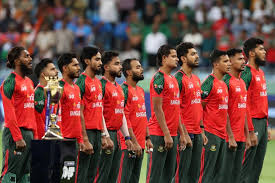
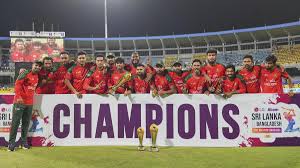
The standoff between the Bangladesh Cricket Board (BCB) and the International Cricket Council (ICC) has reached a breaking point, as Bangladesh officially confirmed on Thursday, January 22, 2026, that its national team will not travel to India for the upcoming T20 World Cup. Citing “genuine and non-negotiable security risks,” the Muhammad Yunus-led interim government has prohibited the team from participating in matches scheduled for Kolkata and Mumbai, leading to an unprecedented crisis just two weeks before the tournament’s February 7 kickoff. BCB President Aminul Islam Bulbul and Sports Adviser Asif Nazrul have remained defiant despite a 24-hour ultimatum from the ICC, asserting that the global body’s refusal to shift their fixtures to Sri Lanka constitutes a failure of justice. During a high-stakes press conference in Dhaka, Islam vowed to “keep fighting” for the rights of the 200 million cricket fans in Bangladesh, arguing that the ICC is “locking away” a massive portion of the global audience and that any attempt to replace them with Scotland would be a historic blunder that undermines the organization’s neutrality.
The Trigger: The Mustafizur Rahman Controversy
The root of this diplomatic and sporting fracture lies in the recent removal of star pacer Mustafizur Rahman from the Kolkata Knight Riders (KKR) in the IPL 2026. According to the BCB, the BCCI (Board of Control for Cricket in India) instructed the franchise to release Mustafizur due to unspecified “developments all around,” which the Bangladesh government interpreted as a direct admission that Indian authorities could not or would not guarantee the safety of Bangladeshi citizens under pressure from local extremist groups. Asif Nazrul emphasized that if a single high-profile player could be “kicked out” of a domestic league over security concerns, it is impossible to trust the safety of an entire national contingent during a high-profile World Cup. This incident turned a bilateral tension into a full-scale boycott, as Bangladesh maintains their safety concerns are based on “concrete events” rather than “abstract analysis.”
The ICC’s Hardline Stance
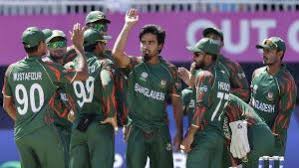
The ICC has largely dismissed these claims, following a board meeting on January 21 where members voted 14-2 against relocating Bangladesh’s matches. The governing body stated that independent security assessments showed no credible threat to any participating team and warned that shifting venues so close to the event would create a logistical nightmare and set a “dangerous precedent” for future host nations. By rejecting the BCB’s request for a “hybrid model”—similar to the one used during the 2023 Asia Cup—the ICC has effectively cleared the way for Scotland to take Bangladesh’s place in Group C alongside England, the West Indies, Italy, and Nepal.
Regional Solidarity and Economic Fallout
The situation has been further complicated by the Pakistan Cricket Board (PCB), which stood alone in supporting Bangladesh’s proposal. PCB Chairman Mohsin Naqvi reportedly offered to host Bangladesh’s matches in Pakistan or elsewhere to avoid the India venues, and some reports suggest Pakistan is considering their own “solidarity boycott” in support of Dhaka. For the players, the decision is devastating; superstars like Litton Das and Najmul Hossain Shanto are caught between their government’s directive and the loss of significant match fees and global exposure. As the “Big Force” of international cricket politics clashes with national sovereignty, the 2026 T20 World Cup faces the very real possibility of proceeding without one of its most passionate fanbases, leaving a lasting scar on the governance of the sport in South Asia.
About the Author