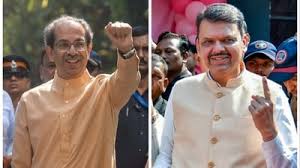
The January 2026 Maharashtra civic poll results represent a historical realignment of power, serving as a decisive referendum on the three men who have defined the state’s politics since the 2022 split. For Devendra Fadnavis, this victory is the ultimate validation of his “Mission Mumbai” strategy and his role as the principal architect of the BJP’s urban expansion.
By leading the party to become the single largest entity in the BMC with 89 seats, Fadnavis has finally achieved what the BJP has sought for decades: the keys to India’s richest civic body without being a junior partner to a Thackeray.
this win strengthens his position within the national BJP hierarchy, proving that his “Triple Engine” governance model—aligning the Center, State, and Civic levels—can dismantle even the most entrenched regional bastions.
For Fadnavis, the 2026 verdict is not just a municipal win; it is a clear path toward reclaiming the Chief Minister’s chair in the next Assembly cycle, as he has effectively consolidated the non-Marathi and middle-class Marathi votes under a single “pro-development” banner.
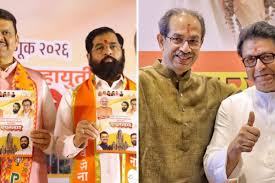
For Eknath Shinde, the results provide the “electoral legitimacy” that has eluded him since his high-profile revolt. Winning 29 seats in the BMC and sweeping several other corporations like Mira-Bhayandar and Ulhasnagar allows Shinde to argue that he is not merely a “regime-changer” backed by Delhi, but a leader with a genuine grassroots pulse.
By securing a crucial share of the traditional Shiv Sena vote, Shinde has successfully challenged the notion that the “Sena” is inseparable from the Thackeray bloodline. His performance as a “Kingmaker” in the Mahayuti alliance ensures his continued relevance, proving that his focus on “pothole-free roads” and “direct administration” resonated with a segment of voters tired of ideological stalemates.
However, the 2026 verdict also places a heavy burden of performance on him; as the junior partner in the BMC, he must now ensure that the BJP’s growing shadow doesn’t eventually swallow his faction.
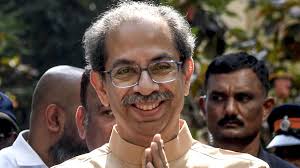
Conversely, for Uddhav Thackeray, the loss of the BMC is a catastrophic blow to the institutional and financial foundation of the Shiv Sena (UBT). For nearly 30 years, the BMC’s ₹74,400 crore budget served as the party’s lifeline, funding its vast network of “shakhas” and providing the patronage necessary to maintain a dedicated cadre.
While his faction’s 65 seats prove that a significant “sympathy wave” and a loyal core of Marathi voters remain, the loss of administrative control means Thackeray is now fighting an existential battle with significantly fewer resources.
His tactical alliance with Raj Thackeray failed to create the expected “Marathi surge” to stop the saffron wave, suggesting that the “Thackeray brand” may no longer be enough to win in an increasingly cosmopolitan and infrastructure-focused Mumbai.
This defeat forces Uddhav into a long-term strategic retreat, where he must reinvent the party’s identity beyond “nativist” politics to survive as a purely regional force in a BJP-dominated era
About the Author