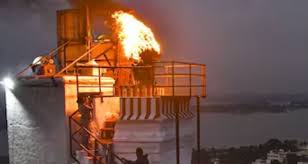
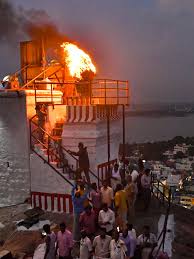
In a landmark ruling delivered on January 6, 2026, the Madurai Bench of the Madras High Court definitively settled the volatile “Deepam row,” upholding a single-judge order that permits the lighting of the Karthigai Deepam lamp atop the Thiruparankundram hill in Madurai. A Division Bench comprising Justice G. Jayachandran and Justice K.K. Ramakrishnan dismissed the Tamil Nadu government’s appeal, which had sought to block the ritual citing potential communal disharmony and law-and-order concerns. Beyond the legal technicalities, the court’s verdict was notable for its scathing critique of the state administration and various political actors, with the judges “blasting” what they termed a “purely political agenda” that had unnecessarily communalized a century-old tradition.
The Core of the Conflict
The controversy centers on the Deepathoon, an ancient stone pillar located on a lower peak of the Thiruparankundram hill, near the famous Arulmigu Subramania Swamy Temple. While the temple has historically maintained that lighting a lamp on this pillar is a vital part of the annual Karthigai Deepam festival, the state government and the Sikandar Dargah—located on the higher summit—opposed the move. The state argued that the practice had been abandoned for decades and that reviving it would infringe on the religious rights of the Muslim community at the Dargah. However, the High Court relied on historical records and a 1920 Privy Council decree, which established that the unoccupied portions of the hill, including the area surrounding the Deepathoon, belong to the temple. The court ruled that lighting a lamp 50 meters away from the Dargah did not violate anyone’s rights, famously stating, “Amity is to be celebrated, but the rights of one party cannot be sacrificed at the altar of a perceived threat.”

Blasting the “Political Agenda”
The most striking aspect of the January 6 proceedings was the court’s verbal takedown of the “unnecessary politicization” of the ritual. The judges observed that the issue had been hijacked by political groups to create a “religious slugfest” ahead of the 2026 Assembly elections. The court criticized the DMK-led state government for failing to act as a neutral mediator, suggesting that the administration should have used the occasion to foster communal harmony rather than using police force to block devotees. The Bench noted with concern that while the legal battle raged, the issue was weaponized on social media and in Parliament, leading to an atmosphere of fear. By affirming that the lamp can be lit, the court aimed to strip the issue of its political utility, essentially telling both the ruling party and the opposition (BJP) that the judiciary would not allow religious sentiments to be used as “political fodder.”
Implications for Religious Freedom
The ruling is seen as a significant victory for the petitioner, Rama Ravikumar of the Hindu Tamil Party, and for proponents of Sanatana Dharma who argued that the state was practicing “selective secularism.” The court emphasized that a “settled issue cannot be reopened” and that temple authorities have a legal duty to periodically assert their property rights to prevent encroachment. To ensure safety, the court directed that the lighting be done in consultation with the Archaeological Survey of India (ASI), given the hill’s status as a protected site. This nuanced approach—balancing religious tradition with administrative safety—has been hailed as a blueprint for resolving similar “site-based” religious disputes across the country.

A Path Toward Peace
Following the verdict, security has been tightened around the Thiruparankundram hill to prevent any further flare-ups. The court’s rejection of the state’s stay petition means that the lamp will finally be lit at the Deepathoon, marking the end of a bitter standoff that saw lathi-charges, arrests, and even an impeachment motion filed against a judge in Parliament. As the state prepares to comply with the order, the “Deepam row” serves as a stark reminder of the judiciary’s role in shielding cultural traditions from the crosswinds of high-stakes politics.
About the Author