
Aanand L. Rai’s Tere Ishk Mein, billed as a spiritual successor to his 2013 film Raanjhanaa, was met with widespread criticism for its highly dysfunctional and, in the eyes of many critics, alarmingly toxic central relationship. The film centers on Shankar (Dhanush), a volatile and aggressive law student (later an Air Force pilot) who channels his deep-seated rage, stemming from a childhood trauma, into violent outbursts and a passionate, yet obsessive, love.
His path crosses with Mukti (Kriti Sanon), a brilliant psychology PhD scholar whose thesis is based on the highly questionable premise that anger can be completely eradicated from the human psyche through love. Mukti deliberately chooses the hot-headed Shankar as her subject, seeing him as the perfect case study to validate her research, thus initiating an ethically bankrupt, manipulative relationship under the guise of an academic experiment.
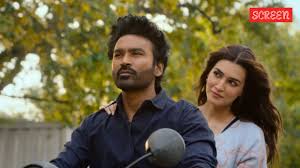
The core of the film’s toxicity lies in the blatant blurring of lines between psychological intervention, emotional exploitation, and full-blown obsession. Mukti, despite her supposed academic maturity, consistently gaslights Shankar, leading him on and mistaking his developing, intense affection for genuine progress in her experiment.
The screenplay, co-written by Himanshu Sharma, goes to absurd lengths to glorify Shankar’s “alpha male” aggression and lack of boundaries, ultimately romanticizing his destructive tendencies. This reaches a low point when Mukti, driven by a desire to complete her thesis, agrees to a physical exchange demanded by Shankar in return for enduring a public slap, a scene critics flagged as ethically bankrupt and a total mockery of psychology.

The film’s second half sees the characters’ lives diverge into chaos: Shankar, shattered by Mukti’s final rejection—which includes asking him to clear the UPSC exam as a condition for marriage, which she assumes he cannot fulfill—spirals into deeper rage, resorting to fire-bombing her house and dedicating himself to becoming a fighter pilot.
Mukti, meanwhile, marries another man but descends into severe alcoholism and disillusionment, presented by the script as a consequence of her own manipulative actions and a punishment for breaking Shankar’s heart. Ultimately, Tere Ishk Mein fails in its supposed attempt to dissect the trope of the troubled alpha male.
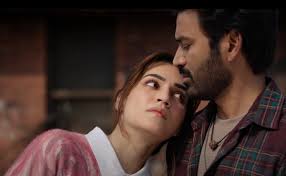
Instead of critiquing toxic masculinity, it reinforces the destructive idea that obsessive aggression is a form of “grand passion” and that the woman’s agency and common sense can be sacrificed at the altar of this chaotic, all-consuming love story.
Even the powerful performances by Dhanush and Sanon, which reviewers praised for their intensity, could not salvage the fundamentally flawed and illogical narrative, leaving the audience with a story where two broken individuals are simply too far gone for any form of real-world healing, much less a therapeutic intervention.
About the Author