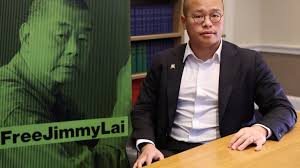
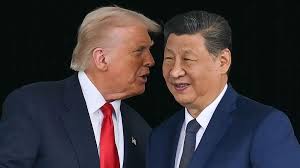
The recent conviction of Hong Kong media tycoon and pro-democracy figure Jimmy Lai on national security charges has prompted a direct and personal appeal from US President Donald Trump to Chinese President Xi Jinping for Lai’s release.
Speaking to reporters, President Trump stated that he felt “so badly” about the 78-year-old British citizen, who was recently found guilty of two counts of conspiracy to collude with foreign forces and one count of conspiracy to publish seditious publications under the controversial, Beijing-imposed National Security Law.
Trump confirmed that he had raised Lai’s case, which could lead to a life sentence, with Xi Jinping during their face-to-face meeting in South Korea in October of this year. The US President stressed a humanitarian concern for the jailed mogul, telling reporters, “I spoke to President Xi about it, and I asked to consider his release. He’s not well, he’s an older man, and he’s not well, so I did put that request out. We’ll see what happens.”
This public urging follows Lai’s conviction, which has been widely condemned by international governments and human rights organizations as a politically motivated prosecution that underscores the dramatic erosion of judicial independence and press freedom in Hong Kong.
Lai, the founder of the now-shuttered pro-democracy newspaper Apple Daily, has been imprisoned since late 2020 and is already serving sentences for several protest-related and fraud convictions. His trial, which lasted over two years and was conducted before government-appointed judges without a jury, was viewed globally as a critical test of the “one country, two systems” framework, intended to guarantee Hong Kong’s autonomy and civil liberties.
The Hong Kong High Court judges, in their lengthy verdict, accused Lai of being the “mastermind” of conspiracies designed to destabilize the Chinese government by inviting foreign forces to impose sanctions, a claim Lai has continuously denied, despite acknowledging his long-standing criticism of Beijing.
The US administration’s move to address Lai’s case, with Secretary of State Marco Rubio also issuing a statement urging his release on humanitarian grounds due to his deteriorating health, signals a renewed diplomatic effort to challenge China’s control over Hong Kong, marking the case as a priority in Sino-American relations despite previous reticence from the administration on politically sensitive issues.
About the Author