Trump’s $12 Billion Farm Aid Package to Counter Trade Disruptions
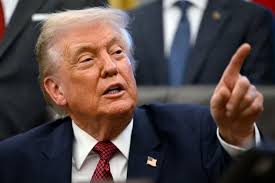
President Donald Trump recently unveiled a $12 billion farm aid package to support American farmers, a crucial political constituency, who have faced significant financial hardship due to what the administration termed “unjustified trade actions,” primarily the retaliatory tariffs imposed by China and other trading partners in response to U.S. tariff hikes.
This package, officially designated to be distributed through the newly designed Farmer Bridge Assistance (FBA) Program, is intended to act as a financial cushion for producers until new trade deals and long-term improvements to the farm safety net, such as those outlined in the One Big Beautiful Bill Act (OBBBA), take full effect.
Up to $11 billion of the total aid is earmarked for one-time direct payments to row crop farmers—including producers of corn, soybeans, wheat, cotton, rice, and sorghum—who have experienced market disruptions, elevated input costs, and persistent inflation. The remaining $1 billion is reserved for specialty crops and sugar, with specific distribution details still under development.
The assistance is funded through the U.S. Department of Agriculture’s (USDA) Commodity Credit Corporation (CCC) Charter Act and will be administered by the Farm Service Agency (FSA), with the administration emphasizing that the money is derived from tariff revenue collected from foreign goods.
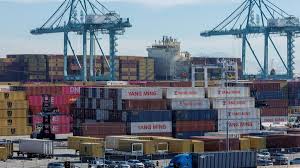
The need for this significant intervention stems from the adverse effects of trade disputes, particularly with China, which heavily impacted the U.S. soybean market, a cornerstone of American agricultural exports. Since China curtailed its purchases of U.S. soybeans in retaliation for tariffs, American farmers have struggled with low commodity prices and a shrinking share of the global market.
The administration framed the aid as a necessary measure to ensure the financial health of the sector, arguing that it serves as a “bridge” to a more stable future promised by the president’s trade and domestic policy initiatives. The eligibility for the payments has been set with income limitations, and farmers are required to submit acreage data to determine their payment amounts, with the goal of distributing the funds by early 2026.
This $12 billion injection follows other recent aid programs and is a critical move to address farmer frustration over the economic pain caused by volatile market conditions, soaring costs, and the lingering effects of the trade war, especially in light of the overwhelmingly strong support the farming community has historically provided to President Trump.
Critics, however, have labeled the ad hoc payments as a temporary “Band-Aid” that fails to address the fundamental instability in global agricultural markets, preferring instead a focus on open trade and more robust, market-based safety nets.
About the Author