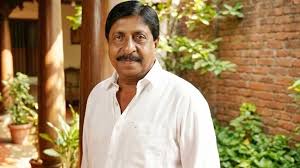
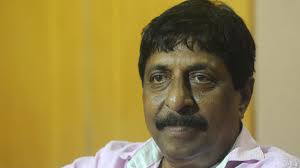
The Malayalam film industry and the cultural landscape of Kerala are today mourning the profound loss of Sreenivasan, the legendary actor, scenarist, and filmmaker, who passed away on December 20, 2025, at the age of 69.
A true polymath of Indian cinema, Sreenivasan breathed his last at a hospital in Kochi (specifically reported as the Tripunithura Taluk Hospital) following a prolonged battle with health complications, including cardiac ailments that had kept him away from the silver screen for intermittent periods.
Born on April 6, 1956, in the village of Patyam near Thalassery, Sreenivasan’s journey from a middle-class household in Kannur to the pinnacle of Mollywood is a testament to his unparalleled wit and observational brilliance. He was a student of the Film and Television Institute of Tamil
Nadu, where he was a classmate of the legendary Rajinikanth—a partnership that remained a point of fond nostalgia throughout his career.
His debut in P.A. Backer’s Manimuzhakkam in 1976 marked the beginning of a five-decade-long career during which he acted in over 225 films and penned some of the most enduring scripts in the history of regional cinema.
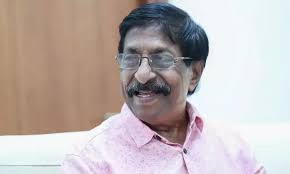
Sreenivasan was much more than just a performer; he was the voice of the common man and the undisputed master of social satire.
His unique ability to find humor in the mundane struggles of the Malayali middle class, coupled with a sharp, often self-deprecating wit, allowed him to critique society without being preachy.
His legendary collaborations with director Sathyan Anthikad and actor Mohanlal in the 1980s and 90s defined the “Golden Age” of Malayalam cinema.
Characters like Dasen and Vijayan from the Nadodikkattu trilogy became cultural icons, representing the anxieties and aspirations of unemployed youths with a blend of slapstick and sincerity.
Perhaps his most significant contribution as a writer remains “Sandesham” (1991), a political satire that remains as relevant today as it was thirty years ago.
Through the bickering of two brothers with opposing political ideologies, Sreenivasan exposed the hollowness of blind partisanship, creating a film that is still the primary source for political memes and social discourse in Kerala.
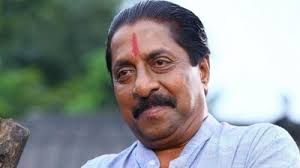
Beyond his writing, Sreenivasan proved his mettle as a director with masterpieces like Vadakkunokkiyanthram (1989) and Chinthavishtayaya Shyamala (1998).
These films explored the depths of the human psyche—paranoia in the former and the domestic struggles of a neglected wife in the latter—earning him both National and State Film Awards.
His performances were never about “heroism” in the conventional sense; instead, he embraced the roles of the underdog, the insecure husband, or the cynical intellectual, making him immensely relatable.
Even in his later years, films like Udayananu Tharam and Katha Parayumpol (which he also produced and which was remade in several languages) showed that his storytelling prowess had not dimmed with time.
He is survived by his wife, Vimala, and his sons, Vineeth and Dhyan Sreenivasan, who have successfully carried forward his creative legacy in the industry. As the curtains fall on this legendary life,
Sreenivasan leaves behind a void that is impossible to fill, but his scripts will continue to serve as a mirror to society, teaching generations of Malayalis to laugh at their own follies while thinking deeply about the world around them.
His passing is not just the end of an era; it is the loss of a sharp-eyed critic who loved his people enough to make them laugh at the truth.
About the Author