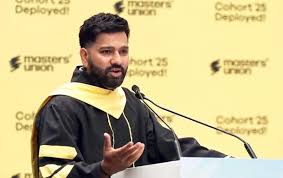
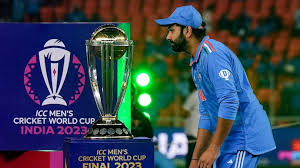
The stunning revelation made by Rohit Sharma at the Masters’ Union Convocation 2025 in Gurgaon on December 21 has provided a profoundly human look into the mental toll of elite sports, as he confessed to seriously considering immediate retirement following the 2023 ODI World Cup final defeat. Speaking to a captivated audience of students and fans, the former Indian multi-format captain admitted that the six-wicket loss to Australia at Ahmedabad was not just a professional setback but a “total depletion” of his soul, leaving him so “completely devastated” that he felt he had “nothing left” to offer the game. Rohit explained that ever since assuming the captaincy in 2022, his singular focus had been the 2023 home World Cup, and when the dream shattered despite a dominant 10-match unbeaten streak, the resulting “emptiness” made him want to walk away from cricket forever.
“At one point, I honestly felt like I didn’t want to play this sport anymore because it had taken everything out of my body,” he shared, describing a period of several months where he avoided the field and wrestled with the question of whether he could ever find the “hunger” to start another grueling cycle.
This internal crisis was born from the sheer emotional investment he had poured into the team’s “fearless” brand of cricket; to see it fall one step short in front of a silenced home crowd felt like a personal failure that outweighed his individual success as the tournament’s second-highest run-scorer. However, Rohit noted that it was through rigorous self-reflection and a reminder of his childhood love for the game that he eventually gathered the strength to “reset.”
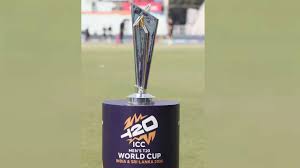
This mental pivot proved historic, as it led to a spectacular “redemption arc” that saw him guide India to the 2024 T20 World Cup title in Barbados and, more recently, the 2025 Champions Trophy victory against New Zealand. Rohit used his story of near-retirement to teach the graduates about resilience, emphasizing that “life doesn’t end” at the point of greatest disappointment, though it may feel like it in the moment.
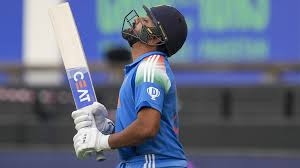
From the perspective of late 2025, his decision to persevere has redefined his legacy; he is now viewed as the leader who bridged the gap between a decade of ICC heartbreak and a new era of global dominance. Despite the subsequent triumphs, the landscape of his career has shifted significantly; following the Champions Trophy win, Rohit announced his retirement from Test cricket, joining Virat Kohli in stepping away from the longest format to preserve his longevity.
Furthermore, having already retired from T20Is after the 2024 triumph, he has now transitioned into a one-format specialist.
In a surprising twist mentioned during the same event, Rohit confirmed that while he will continue to play ODIs with an eye on the 2027 World Cup, he will do so as a senior batter rather than the leader, as the selectors have officially handed the ODI captaincy to Shubman Gill. Rohit expressed a sense of peace with this transition, stating that his job was to “steady the ship” and hand it over to the next generation in a better place than he found it.
This candid admission of his brush with retirement serves as a powerful reminder that even the most successful figures in sport are susceptible to burnout and grief, and his journey from the “darkest room” in Ahmedabad to the pinnacle of world cricket in 2024 and 2025 stands as a testament to the fact that the most meaningful victories often come after one chooses not to quit when it would have been easiest to do so.
About the Author