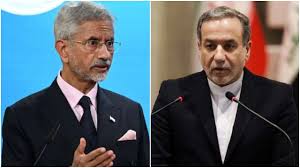
On January 14, 2026, the diplomatic channels between Tehran and New Delhi saw a flurry of activity as Iranian Foreign Minister Abbas Araghchi initiated a high-stakes telephone call with India’s External Affairs Minister, S. Jaishankar.
The discussion focused on what both sides described as the “evolving situation” in and around Iran—a phrase that serves as a diplomatic euphemism for the perfect storm of internal collapse and external military pressure currently battering the Islamic Republic. Araghchi’s outreach came at a critical moment: only hours after the call, he was forced to cancel a long-planned official visit to
New Delhi scheduled for January 15, citing the urgent need to remain in Tehran as the domestic crisis reached a breaking point. For Jaishankar, the call was not just a diplomatic exchange but a strategic briefing on a region where India has immense stakes, ranging from the safety of nearly 10,000 Indian nationals to the future of the multi-billion-dollar Chabahar Port project.
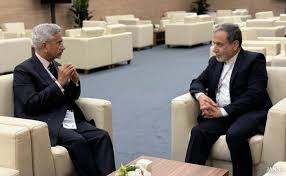
The “evolving situation” discussed by the two ministers is characterized by a brutal domestic crackdown and a looming threat of American intervention. Inside Iran, the worst civil unrest in decades—sparked by a plummeting rial and triple-digit inflation—has spread to all 31 provinces, with human rights organizations now estimating the death toll at over 2,500, though some reports suggest it could be as high as 3,400.
During the call, Araghchi reportedly attempted to frame the unrest as a result of foreign-backed “terrorist operations,” a narrative Tehran has pushed to justify its heavy-handed response. However, the international community’s focus has shifted toward the external threat posed by U.S.
President Donald Trump, who has not only warned of “very strong actions” if executions of protesters continue but has also signaled a potential “regime extraction” posture following the recent capture of Nicolás Maduro. This geopolitical friction has placed India in an increasingly tight spot, as the Trump administration’s threat of a 25% tariff on any country trading with Iran directly challenges India’s “strategic autonomy” and its energy security interests.

India’s immediate response to the deteriorating security environment has been one of extreme caution and proactive protection of its citizens.
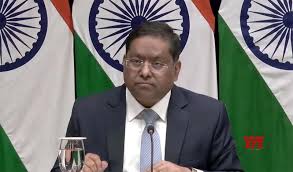
Following the conversation with Araghchi, the Ministry of External Affairs (MEA) issued a “strong advisory” for all Indian nationals—including approximately 2,000 medical students, 4,000 seminary students, and thousands of fishermen—to leave Iran immediately by any available means.
The advisory, which follows a similar warning from early January, underscores New Delhi’s assessment that the situation is no longer manageable or predictable.
For the Indian government, the priority is avoiding a repeat of past evacuation crises, especially as the threat of U.S. or Israeli strikes on Iranian infrastructure remains “locked and loaded.” Jaishankar’s engagement with
Araghchi thus serves as a dual-purpose tool: it maintains a vital line of communication with a key regional partner while providing the necessary diplomatic cover to facilitate the safe exit of Indian citizens from a potential war zone.
About the Author