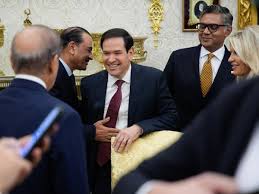
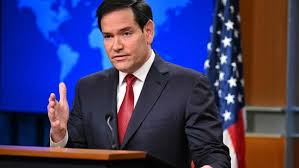
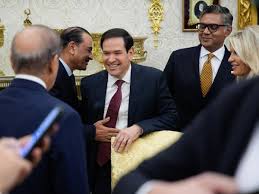
In a significant diplomatic development, U.S. Secretary of State Marco Rubio expressed that the United States is “very grateful” for Pakistan’s offer to consider contributing troops to a proposed International Stabilisation Force (ISF) in Gaza.
Speaking during an end-of-year press conference on December 19, 2025, Rubio confirmed that Pakistan is among several nation-states willing to explore a role in the peacebuilding effort. While Rubio acknowledged the offer with appreciation, he clarified that no firm commitments have been secured yet, noting that the U.S.
still owes potential partners more clarity on the force’s mandate and rules of engagement. This development follows high-level diplomatic pressure from Washington on Islamabad to leverage its “battle-hardened” military for regional stability, particularly as the U.S. seeks to operationalize a “Board of Peace” to oversee Gaza’s transition and reconstruction.
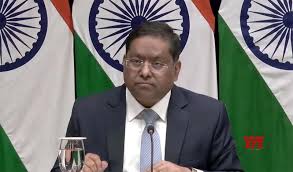
Despite the positive reception in Washington, the situation remains delicate for Pakistan. The Pakistani Foreign Office, represented by spokesperson Tahir Hussain Andrabi, clarified on December 18 that a final decision on troop deployment has not yet been made, characterizing current discussions as exploratory.
Domestic concerns loom large, as any involvement that could be perceived as “disarming” Palestinian groups or doing the bidding of foreign powers could trigger a backlash from local Islamist parties. Pakistani Foreign Minister Ishaq Dar had previously emphasized that while the country is open to peacekeeping, “disarming Hamas is not our job.”
Nevertheless, reports suggest Pakistan may be considering a deployment of up to 3,500 troops, provided the mission focuses on humanitarian protection and aid facilitation rather than offensive operations. As the U.S. continues to engage with roughly 70 nations to fill the ISF ranks, Pakistan’s potential participation is seen as a “key” factor in the legitimacy and effectiveness of the mission
About the Author