Recent satellite imagery captured between late 2024 and February 2026 reveals a significant and systematic effort by Iran to fortify its most sensitive military and nuclear infrastructure, signaling a nation deeply entrenched in a defensive posture against potential United States or Israeli airstrikes. Following the “12-day war” in June 2025—which saw American and Israeli forces conduct high-precision strikes on Iranian enrichment facilities—
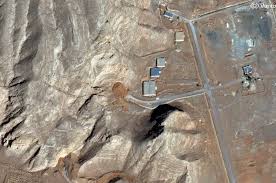
Tehran has pivoted from active production to a “survival and recovery” strategy characterized by what analysts call “passive defense” or “harden and bury” tactics. At the Parchin military complex, approximately 30 kilometers southeast of Tehran, imagery from Planet Labs PBC shows the rapid evolution of a site known as Taleghan 2;
Originally a rectangular building housing a 36-meter cylindrical chamber—potentially for high-explosives testing—it was systematically encased in a massive concrete “sarcophagus” and subsequently buried under thick layers of soil to render it virtually unrecognizable and impervious to standard aerial bombardment.
This effort to create a hardened bunker out of previously damaged or sensitive structures is mirrored at the Isfahan uranium enrichment complex, where all three primary tunnel entrances to the underground storage areas have been completely backfilled with soil and rock, a move intended to dampen the shockwaves of bunker-buster munitions and complicate any potential ground raids by special operations forces.
Simultaneously, at the Natanz nuclear site, intensive excavation continues at the nearby Kolang-Gaz La Mountain, also known as “Pickaxe Mountain,” where satellite photos depict a flurry of activity involving cement mixers, dump trucks, and cranes as Iran reinforces tunnel portals with heavy concrete headworks and adds additional layers of earthen protection to its newest underground halls.
Beyond nuclear facilities, Iran has prioritized the rapid repair of its ballistic missile infrastructure, with imagery showing new roofing and logistical clearance at the Qom and Shiraz South missile bases, half of which were previously targeted in the 2025 conflict. These repairs, completed in the months leading up to February 2026, suggest that Iran is restoring its retaliatory “teeth”—ensuring that even if its above-ground logistics are disrupted, its mobile missile launchers can operate from fortified, concealed locations.
This massive engineering undertaking coincides with the United States’ deployment of its largest military force in the Middle East since 2003, including the USS Abraham Lincoln Carrier Strike Group and advanced F-22 squadrons, as the Trump administration warns that the window for a negotiated settlement in Geneva is rapidly closing.
The visual evidence of buried portals, concrete-reinforced “sarcophagi,” and the concealment of previously exposed assets suggests that Tehran is no longer merely posturing but is actively preparing to absorb a high-intensity kinetic campaign. By shifting its most valuable assets into “invisible” deep-earth environments and hardening the access points,
Iran aims to increase the “cost” of a US strike, betting that the increased difficulty of achieving a decisive military victory will force Washington back to the bargaining table. Ultimately, these satellite images portray a regime that is betting its survival on the earth itself,
transforming its military geography into a series of subterranean fortresses designed to withstand the most sophisticated ordnance in the American arsenal while maintaining a credible, survivable threat of missile retaliation across the region.
About the Author