The legal and political standoff in West Bengal has reached a fever pitch as the Enforcement Directorate (ED) filed a fresh, high-stakes plea in the Supreme Court on January 15, 2026, seeking the immediate suspension of the state’s Director General of Police (DGP) Rajeev Kumar. This move comes just hours before a scheduled hearing in the apex court regarding the alleged obstruction of ED raids at the premises of the political consultancy firm I-PAC (Indian Political Action Committee) and its director, Pratik Jain.
The federal agency’s petition, filed under Article 32 of the Constitution, marks a dramatic escalation in its confrontation with the Mamata Banerjee-led government, as it seeks a Central Bureau of Investigation (CBI) probe into what it describes as a “gross obstruction of justice” by the state’s highest-ranking officials.
The ED has specifically named DGP Rajeev Kumar, Kolkata Police Commissioner Manoj Kumar Verma, and South Kolkata Deputy Commissioner Priyabatra Roy as respondents, alleging that these officers did not merely fail to protect the agency’s search operations but actively abetted an illegal intervention by the Chief Minister herself.
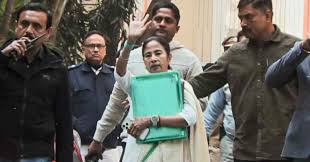
The controversy stems from the chaotic events of January 8, 2026, when ED officials attempted to conduct searches at I-PAC’s Salt Lake office and Jain’s Loudon Street residence as part of a money laundering investigation into an alleged multi-crore coal smuggling scam. According to the ED’s detailed submission, Chief Minister Mamata Banerjee—accompanied by senior Trinamool leaders and nearly 100 police personnel—arrived at the raid sites, confronted the federal officers, and allegedly “bulldozed” the legal proceedings.
The agency claims the Chief Minister “forcibly took possession” of key files and digital devices, including laptops and hard disks, which it asserts contain incriminating evidence related to the routing of ₹10 to ₹20 crore in “proceeds of crime” through hawala channels to I-PAC. The ED argued that the presence of the Chief Minister and top police brass created an “intimidating atmosphere,” effectively hijacking a lawful investigation and allowing for the destruction or removal of vital evidence.
In its plea for the suspension of DGP Rajeev Kumar, the ED drew a parallel to a famous 2019 incident where Kumar, then the Kolkata Police Commissioner, sat on a dharna with the Chief Minister to protest a CBI attempt to question him, arguing that his conduct demonstrates a “pattern of defiance” against central agencies.
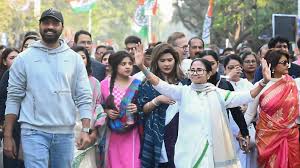
Meanwhile, the West Bengal government has mounted a fierce legal defense, filing a caveat in the Supreme Court to ensure no orders are passed without its side being heard. Chief Minister Banerjee has publicly characterized the raids as a “political witch-hunt” aimed at stealing her party’s internal strategy ahead of the 2026 Assembly elections, describing the ED’s actions as an attempt to “hijack the democratic process” by accessing confidential organizational data.
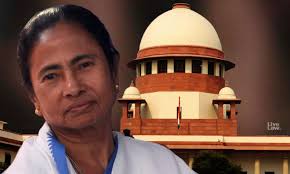
On the same day as the SC plea, the Calcutta High Court disposed of a petition from the Trinamool Congress (TMC) that sought the return of “seized data,” after the ED clarified that it had, in fact, seized nothing from the I-PAC premises because the Chief Minister had allegedly already taken the records away. This technical admission has set the stage for a “showdown” in the Supreme Court today, as a bench comprising Justice Prashant Kumar Mishra and Justice Vipul M.
Pancholi is expected to weigh the ED’s demand for a CBI inquiry and the suspension of the state’s top cop against the state’s claims of federal overreach. As the police have also registered FIRs against ED officials for alleged “theft” during the raid, the case has transformed into a critical test of the constitutional boundaries between state police powers and the authority of central investigative agencies.
About the Author