
As of mid-February 2026, the geopolitical landscape of the Persian Gulf has reached a fever pitch as the United States significantly escalates its military posture in direct response to the “Maritime Security Belt 2026” joint naval exercises launched by Iran, Russia, and China.
These trilateral drills, centered in the Gulf of Oman and the northern Indian Ocean, involve a sophisticated array of assets, including the Russian Baltic Fleet corvette Stoikiy, which recently docked at Bandar Abbas to signal a “multipolar” challenge to what Moscow describes as American maritime hegemony.
While the participating nations frame the maneuvers as a mission for “peace and friendship” and the protection of international trade routes against piracy, the timing and location near the strategic chokepoint of the Strait of Hormuz—through which nearly twenty-five percent of the world’s oil flows—have been interpreted by Washington as a provocative counter-signal to its own “maximum pressure” campaign.
President Donald Trump has responded by authorizing the most substantial deployment of American firepower to West Asia since the 2003 invasion of Iraq, mobilizing a formidable force that includes the USS Abraham Lincoln Carrier Strike Group already on station and the world’s largest aircraft carrier, the USS Gerald R. Ford, which is currently racing toward the Mediterranean and expected to be within striking distance of Iranian assets by February 22.
This naval buildup is augmented by the deployment of F-22 Raptor and F-35 Lightning II stealth squadrons to regional hubs like Jordan’s Muwaffaq Salti Air Base, creating a “steel ring” around the Islamic Republic.
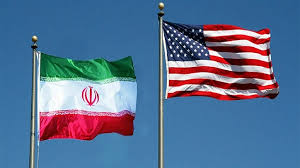
The White House has renewed its explicit threat of military action, with President Trump warning of a “second phase” involving a “very shocking situation” should the indirect nuclear negotiations in Geneva, mediated by Oman, fail to reach a “quick agreement.
” These talks, led by Iranian Foreign Minister Abbas Araghchi and U.S. Special Envoy Steve Witkoff, remain deadlocked over Washington’s demands for a complete cessation of uranium enrichment and a total dismantling of Iran’s ballistic missile program—red lines that Supreme Leader Ali Khamenei has publicly rejected as a violation of Iranian sovereignty.
Compounding the tension is the internal volatility within Iran; widespread anti-government protests and the subsequent state crackdown have provided the U.S. administration with further justification for its “deterrence” strategy, which officials claim is intended to prevent regional instability and protect civilian lives.
In Tehran, the rhetoric is equally defiant, with Iranian naval commanders like Rear Admiral Shahram Irani declaring that “extra-regional fleets” have no place in the Gulf, while state media has even broadcast images of mass graves being prepared at Behesht-e Zahra in anticipation of potential American casualties.
The confluence of high-intensity live-fire drills by an adversarial coalition and the arrival of a second U.S. carrier strike group has created a volatile “tripwire” scenario where a single miscalculation in the narrow confines of the Strait of Hormuz could ignite a full-scale kinetic conflict.
By conducting these exercises alongside Russia and China, Iran is attempting to demonstrate that it is not isolated and that any U.S. strike would have to contend with a contested maritime environment shaped by asymmetric capabilities and the symbolic, yet politically potent, presence of other great powers.
Ultimately, this maritime standoff represents a high-stakes gamble by both sides: Washington is betting that a massive display of force will compel a regime-saving deal from Tehran, while Iran is betting that its subterranean fortifications and its strategic partnership with Moscow will render a U.S. victory too costly to pursue.
About the Author