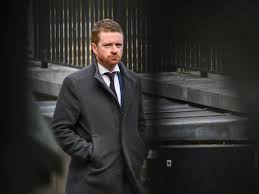

The resignation of Morgan McSweeney, the influential chief of staff to UK Prime Minister Keir Starmer, on February 8, 2026, marks a seismic shift in British politics and a period of profound crisis for the Labour government. McSweeney, often regarded as the “most powerful man in politics” and the strategic architect behind Starmer’s 2024 landslide victory, stepped down following a high-profile scandal involving Lord Peter Mandelson and his historic ties to the convicted sex offender Jeffrey Epstein.
The controversy reached a breaking point after the release of a massive trove of documents known as the “Epstein files,” which suggested that Mandelson had not only maintained a close friendship with Epstein long after his initial conviction but had also allegedly shared sensitive UK government information with him during the 2008 financial crisis.
In a blunt and somber resignation statement, McSweeney admitted that the decision to appoint Mandelson as the UK’s ambassador to the United States in 2024—a move he personally lobbied for—was a grave error that had “damaged our party, our country, and trust in politics itself.” By taking “full responsibility” for the advice he gave the Prime Minister,
The scandal’s roots lie in the controversial vetting process that preceded Mandelson’s appointment to Washington. Despite widespread public knowledge of Mandelson’s ties to Epstein, the government initially defended the choice, with Starmer recently admitting that the depth of the “darkness” within that relationship had been misrepresented to his team.
The fallout intensified as reports emerged that Mandelson had received significant financial payments from Epstein-linked accounts in the early 2000s and had continued to act as a bridge between high-level British governance and Epstein’s orbit. For McSweeney, who was instrumental in purging the Labour Party of its far-left elements and pivoting toward a centrist, “Starmerite” agenda, the Mandelson connection proved to be a fatal blind spot.
His departure leaves the Prime Minister without his “political brain” and most trusted firewall at a time when the government is already struggling with internal dissent over welfare cuts and a series of policy U-turns. With the Metropolitan Police now investigating Mandelson for alleged misconduct in public office, the focus has shifted to whether Starmer can survive the loss of his closest ally.
The appointment of Vidhya Alakeson and Jill Cuthbertson as joint acting chiefs of staff serves as a temporary measure to stabilize Downing Street, yet the shadow of the Epstein scandal continues to loom over the administration, with opposition leaders and even backbench Labour MPs calling for Starmer to follow his aide out the door.
The resignation is not merely the exit of a staffer; it represents the collapse of the inner circle that defined the new Labour era, leaving a vacuum of leadership and a legacy of broken trust that may define the remainder of Starmer’s premiership.
About the Author