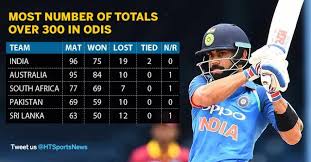
In January 2026, Team India solidified its reputation as the undisputed “Chase Kings” of One Day International (ODI) cricket, reaching a historic milestone that no other nation has yet approached. Following a thrilling victory over New Zealand in Vadodara on January 11, 2026, India became the first team in history to successfully chase down a target of 300-plus runs on 20 separate occasions. This record-breaking feat was anchored by a masterful 93 from Virat Kohli, further extending India’s lead at the top of the all-time list.
For decades, a 300-run target was considered a safe psychological barrier, but the modern Indian lineup—fueled by the consistency of Kohli and the emergence of aggressive young talents like Shubman Gill—has turned these daunting totals into manageable assignments through calculated aggression and deep batting lineups. Global Rankings:
The 300+ Club gap between India and the rest of the world highlights New Delhi’s dominance in high-pressure run chases. As of early 2026, the leaderboard for successful $300+$ ODI chases stands as follows: Rank, Team, Successful
Chases1India202England153Australia144Pakistan125Sri Lanka116New Zealand11Evolution of the Indian ChaseIndia’s journey to the top began in earnest during the early 2000s, but the frequency of these successful chases skyrocketed after 2010.
Iconic matches, such as the 2013 chase against Australia in Jaipur, where India hunted down 360 in just 43.3 overs, redefined what was possible in the format. Statistically, India’s success is built on two pillars: The “Kohli Factor”: Virat Kohli holds the record for the most centuries in successful ODI chases, often serving as the tactical anchor that allows partners to play freely.
Top-Order Foundations: India’s tendency to produce high-scoring opening partnerships ensures that the required run rate remains under control during the middle overs, preventing the “panic” that often collapses other teams
. The Modern Era and Future OutlookWhile teams like England have closed the gap by adopting a “boundary-or-bust” philosophy, India’s balanced approach—mixing strike rotation with explosive hitting—has proven more sustainable across different pitches and conditions.
The most recent win against New Zealand showcased this perfectly; despite a middle-order wobble, the team relied on the composure of veteran KL Rahul and the fearless hitting of newcomer Harshit Rana to cross the line. With the 2027 World Cup on the horizon, India’s ability to treat 300-plus scores as “par” rather than “impossible” makes them the most feared chasing side in the white-ball game.
About the Author