
The ongoing session of the Jammu and Kashmir Legislative Assembly has become a theater of intense political friction following the release of official data that confirms a profound regional imbalance in the distribution of reservation benefits.
According to figures provided by the government in response to a cut motion moved by Peoples Conference chief Sajad Gani Lone on February 11, 2026, a staggering 86% of all reserved category certificates issued in the Union Territory have been granted to residents of the Jammu region, leaving only 14% for the Kashmir Valley.
This disparity is even more glaring in specific categories; for instance, 92.5% of Scheduled Tribe (ST) certificates and 98.7% of Scheduled Caste (SC) certificates are concentrated in Jammu. Even in the Economically Weaker Section (EWS) category—a criterion technically applicable across any geography—Jammu accounts for 91.3% of the beneficiaries.
This data has transformed what was once dismissed as “political rhetoric” into a documented reality, sharpening the debate over whether the current reservation matrix is a tool for social justice or a “social engineering project” designed to tilt the balance of power.
The roots of this “skew” are both geographic and legislative. While Jammu’s dominance in the SC category is largely demographic—the vast majority of J&K’s Dalit population resides there—the ST disparity has widened following the 2024 inclusion of groups like the Paharis, Gadda Brahmins, and Kolis into the ST list.
Furthermore, the Actual Line of Control (ALC) and International Border (IB) quotas are naturally skewed toward Jammu due to the concentration of frontier populations in districts like Rajouri and Poonch.
However, the political fallout is centered on the shrinking Open Merit share, which has dropped to roughly 39-40% as total reservations climb toward 60-70%. Leaders like Lone and Waheed Para of the PDP have characterized this as “systemic regional discrimination,” arguing that the Valley, which holds over 55% of the UT’s population, is being systematically excluded from the bureaucracy.
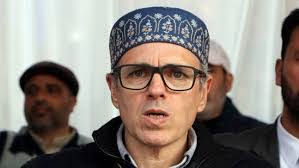
The Omar Abdullah government now finds itself in a precarious position; while a Cabinet Sub-Committee has recommended cutting RBA and EWS quotas to restore the Open Merit share to 50%, the proposal is currently pending approval with Lieutenant Governor Manoj Sinha. As the debate intensifies, the core challenge remains: how to honor the constitutional promise of affirmative action without triggering political alienation in the Valley.
About the Author