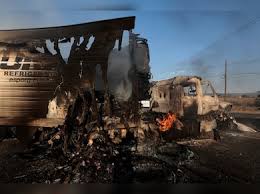
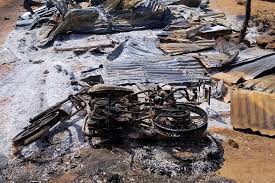
The recent massacre in Kwara State represents a devastating escalation of violence in a region of Nigeria that has traditionally been spared the worst of the country’s long-running insurgency. On the night of February 3, 2026, a massive group of heavily armed suspected jihadist fighters descended upon the rural villages of Woro and Nuku in the Kaiama Local Government Area.
The ensuing violence resulted in the deaths of approximately 170 people, marking it as one of the deadliest single assaults in Nigeria’s north-central region in years. Survivors and local officials recounted a chilling sequence of events: the attackers, who had reportedly been operating in the nearby Kainji National Park forests, gathered the villagers and demanded they renounce the state and submit to a radical, extremist interpretation of Sharia law.
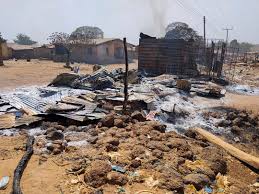
When the community—which is predominantly Muslim—refused to succumb to this indoctrination, the militants responded with indiscriminate brutality. Victims were reportedly shot at close range, others were bound and executed, and several homes and shops were set ablaze, leaving the survivors to flee into the surrounding bushland in total darkness.
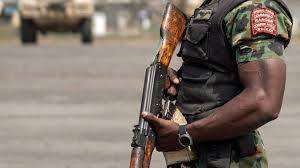
The sheer scale of the slaughter has sent shockwaves through the country and prompted an immediate, albeit reactive, response from the federal government. President Bola Tinubu officially condemned the attack as “cowardly and barbaric,” specifically praising the villagers for their courage in resisting extremist conscription. In a direct military response, the presidency announced the deployment of a full army battalion to the Kaiama district to establish a permanent presence in an area that had previously been under-policed.
This deployment is the centerpiece of a new initiative dubbed Operation Savannah Shield, aimed at “checkmating” the movement of terrorists who are increasingly using the vast, porous borderlands between Kwara and Niger State as a tactical corridor. For many security analysts, however, the deployment is a bittersweet development. Reports from organizations like Amnesty International and local intelligence experts suggest that this tragedy was not a surprise; the militants had allegedly been sending warning letters and pamphlets to the villages for over five months.
The fact that such a large-scale massacre occurred despite these explicit threats has raised pointed questions about the effectiveness of Nigeria’s early-warning systems and its intelligence-sharing between rural communities and the central command.
About the Author