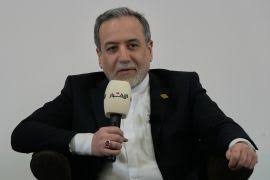

In mid-January 2026, a significant diplomatic pivot has emerged in the volatile relationship between Washington and Tehran, as Iranian Foreign Minister Abbas Araghchi and U.S. President Donald Trump both signaled a tentative de-escalation regarding the treatment of anti-government protesters. During a high-stakes interview with Fox News on January 14, Araghchi explicitly denied that the Islamic Republic intended to carry out executions of those detained during the recent wave of nationwide unrest, stating categorically that “hanging is out of the question” and that there is “no plan for hanging at all.
” This statement appeared to be a direct response to the intense international pressure and specific military threats issued by the Trump administration, which had warned of “very strong actions” and a “rescue” mission for the Iranian people if the regime followed through with reported death sentences.
President Trump, speaking from the Oval Office shortly after the interview, told reporters that he had been assured by “very important sources on the other side” that the killings of demonstrators had stopped and that planned executions were being halted. Describing the communication as a “very good statement,” Trump’s tone shifted noticeably from his earlier “locked and loaded” rhetoric, suggesting a “face-saving” opening for diplomacy even as he maintained that he would “watch what the process is” before making a final decision on military intervention.

This cooling of tensions follows a period of extreme friction, including the “12-day war” in June 2025, where the U.S. and Israel targeted Iranian nuclear facilities, and the recent January 3, 2026, capture of Nicolás Maduro in Venezuela, which served as a stark warning to Tehran about the Trump administration’s willingness to use special forces for “regime extraction.
” While the Iranian leadership characterizes the protests—which were triggered by a collapsing currency and high inflation—as foreign-backed ‘terrorist operations’ and claims the country is now under ‘full control,” human rights organizations like Amnesty International present a far grimmer reality. Reports from these groups suggest that the crackdown has resulted in thousands of deaths—exceeding 3,400 by some estimates—and nearly 20,000 arrests since late December 2025.
Despite the Foreign Minister’s public assurances that executions are off the table, the Iranian judiciary has continued to label many detainees as mohareb (enemies of God), a charge that traditionally carries the death penalty.

Consequently, many analysts view the current rhetorical shift as a strategic maneuver by both sides: for Iran, it is a way to forestall imminent U.S. strikes that could further destabilize the regime; for Trump, it provides a potential path to claim a diplomatic victory and avoid a protracted Middle Eastern conflict that contradicts his “America First” instincts.
The situation remains precarious, as the gap between the regime’s official narrative of “calm” and the documented evidence of mass casualties continues to widen, leaving the international community to wonder if this “softening” of rhetoric represents a genuine shift in policy or merely a temporary pause in a much larger confrontation.
About the Author