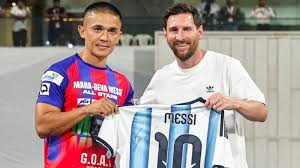
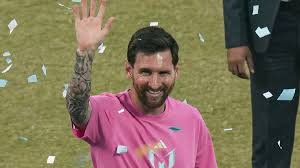
The Indian football ecosystem was thrown into a state of intense soul-searching on December 17, 2025, when national team captain Sandesh Jhingan issued a “desperate plea” following the conclusion of Lionel Messi’s high-profile “GOAT Tour” in India.
The three-day spectacle, which saw Messi traverse Kolkata, Hyderabad, Mumbai, and New Delhi, was designed as a massive commercial roadshow, yet it left many within the domestic football community feeling alienated and frustrated. Jhingan’s emotional social media post highlighted a staggering financial irony:
while an estimated ₹500 crore (approximately $60 million) was mobilized for a 72-hour promotional visit by international stars like Messi, Luis Suárez, and Rodrigo De Paul, the Indian Super League (ISL) and the broader domestic infrastructure are currently struggling to survive.
Jhingan expressed deep reflection over the fact that while fans were willing to spend lakhs for a 45-minute glimpse of an icon, a tender floated by the All India Football Federation (AIFF) to operate the ISL at a cost of just ₹35 crore per year recently went unanswered due to a lack of commercial interest.
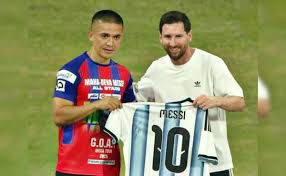
The “desperate plea” from the 32-year-old defender was not an attack on Messi himself—whom he acknowledged as a global inspiration—but rather a critique of a “systemic failure” in Indian sports investment.
Jhingan noted that the country stands on the “brink of having no active domestic football” because the willingness to invest in local talent is nonexistent compared to the “fanatic drumming up” of foreign legends.
This sentiment was echoed by former stars like Gautam Sarkar and Subrata Bhattacharya, who labelled the tour a “gimmick” and a “handshake visit” that offered no tangible benefit to the grassroots game. The irony was further sharpened by the nature of the events.
Messi did not play a single competitive minute during the tour. Instead, his itinerary was packed with high-end meet-and-greets, a charity fashion show in Mumbai, and the unveiling of a 70-foot statue in Kolkata, leading many to argue that the event was a “glitzy roadshow” for politicians and Bollywood elites rather than a sporting event.
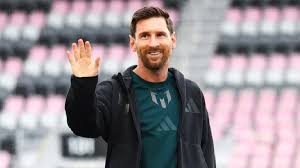
The situation turned even darker in Kolkata, where the tour’s opening leg at the Salt Lake Stadium descended into chaos. Fans who had paid between ₹4,500 and ₹25,000 for tickets were left furious when they were unable to see the star due to overcrowding and a heavy VVIP presence on the pitch.
The frustration boiled over into a riot, with spectators vandalising the historic stadium, forcing security to whisk Messi away earlier than planned. In the aftermath, the tour’s promoter, Satadru Dutta, was arrested and sent to 14 days’ police custody on charges including provocation with intent to cause a riot and criminal conspiracy, as authorities began tracing the “money trail” of the crores spent on the event.
Jhingan’s plea also touched on the responsibility of the players themselves, acknowledging that the national team’s poor performance and sliding FIFA rankings have made it harder to attract sponsors.
However, he argued that “football does not exist in isolation” and that without structure, stability, and belief from the corporate sector, the sport in India would remain in a perpetual state of “doldrums.” The contrast of 2025 has become a defining metaphor for Indian football: a country capable of generating hundreds of crores for a “glittering distraction” while its own professional league remains in limbo, begging for a fraction of that investment to keep the lights on.
About the Author