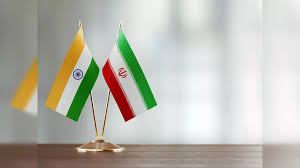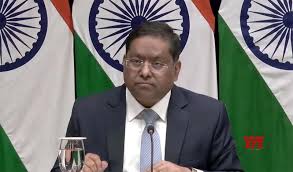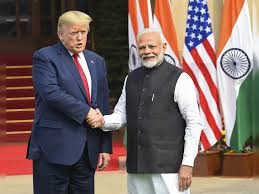
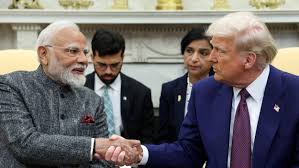
Negotiations for a landmark interim trade agreement between India and the United States have been abruptly postponed, casting a shadow of uncertainty over the ambitious March 2026 timeline previously agreed upon by both nations.
The decision to “pause” the talks came on Sunday, February 22, 2026, just as a high-level Indian delegation led by Chief Negotiator Darpan Jain was scheduled to depart for Washington D.C. to finalize the legal text of the deal.
This sudden derailment is the direct result of a “tariff row” triggered by a seismic U.S. Supreme Court ruling on February 20, which declared President Trump’s use of the International Emergency Economic Powers Act (IEEPA) to impose country-specific “reciprocal” tariffs as unconstitutional.
The ruling effectively stripped the White House of its primary leverage—the ability to unilaterally levy duties of up to 50% on trading partners—and forced the administration to scramble for a new legal framework. In response, the U.S. government quickly pivoted to Section 122 of the Trade Act of 1974, announcing a temporary 15% global import surcharge to replace the invalidated duties.
For New Delhi, the new 15% global rate creates a complex diplomatic and economic paradox that has fundamentally altered the math of the negotiation. Under the framework established on February 6, 2026,
India had tentatively agreed to a “concessional” tariff rate of 18% on its exports to the U.S. in exchange for significant commitments, including the purchase of $500 billion in American energy, technology, and aircraft over five years, as well as a controversial pledge to halt all purchases of Russian crude oil.
However, with the Supreme Court ruling and the subsequent 15% surcharge, India’s “special” 18% rate is now technically higher than the blanket rate being applied to other nations. This shift has led the Indian Ministry of Commerce to reassess its position, as the incentives for making such massive concessions have diminished.
Experts suggest that the deal must now be “realigned” to ensure it remains equitable, with Indian officials likely pushing for a rate significantly lower than the 15% global floor to justify the strategic shift away from Russian energy.
The postponement signifies a major “bottleneck” in what was supposed to be a fast-tracked diplomatic victory. Commerce Minister Piyush Goyal had previously indicated that the deal would be signed in March and implemented by April, but that schedule is now “likely to get hit” as both sides navigate the legal and political fallout.
The U.S. Trade Representative (USTR), Jamieson Greer, who was expected to visit New Delhi in early March for the signing ceremony, remains in constant communication with his Indian counterparts, yet no new date for the chief negotiators’ meeting has been set.
The “pause” allows both governments to evaluate the implications of the 150-day statutory limit attached to the new 15% surcharge and whether the U.S. Congress will intervene to provide a more permanent tariff structure.
The atmosphere in the trade community is one of “cautious waiting,” as exporters in sectors like textiles, gems, and engineering goods face a dizzying flux in duty rates. In just 48 hours, effective tariffs on Indian goods swung from 50% down to 10% following the court ruling, and then back up to 15% after the new executive proclamation.
As both nations wait for the dust to settle, the delay highlights the fragility of trade diplomacy in an era of intense judicial oversight and executive volatility. While both New Delhi and Washington remain publicly committed to the “fantastic relationship” touted by their leaders, the path to a signed agreement in March now requires a complete overhaul of the negotiated text to reflect the new reality of American trade law.
About the Author