On February 12, 2026, the Indian Ministry of Defence marked a transformative moment in its national security posture by greenlighting a massive $40 billion (₹3.62 lakh crore) military modernization package.
This ambitious “Acceptance of Necessity” (AoN), issued by the Defence Acquisition Council (DAC) under Defence Minister Rajnath Singh, represents the single largest defense procurement push in the country’s history. At its heart is a monumental bet on French aerospace technology and American maritime surveillance, a dual-track strategy designed to address critical gaps in India’s air dominance and maritime domain awareness.
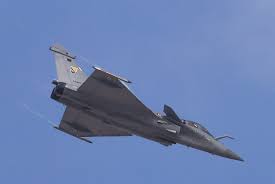
As the Indian Air Force (IAF) grapples with a record-low squadron strength of just 29—well below the sanctioned 42—the centerpiece of this upgrade is the long-awaited procurement of 114 Rafale Multi-Role Fighter Aircraft (MRFA). Valued at approximately $36 billion (₹3.25 lakh crore), this deal is being colloquially termed the “mother of all defense deals.
To align with the “Atmanirbhar Bharat” (Self-Reliant India) initiative, the deal is structured so that only 18 jets will arrive in “fly-away” condition from France, while the remaining 90 aircraft will be manufactured domestically in India with a mandate for nearly 50% indigenous content. This massive induction will eventually bring India’s total Rafale fleet to 176, providing a high-tech “bridge” while the country waits for its home-grown Advanced Medium Combat Aircraft (AMCA) to enter service in the next decade.
Bolstering the “Eyes and Ears” of the Indian Ocean
Parallel to the air power surge, the DAC has also prioritized the Indian Navy’s surveillance capabilities by approving the purchase of six additional Boeing P-8I Poseidon long-range maritime reconnaissance aircraft from the United States. These “submarine hunters” are specifically designed for anti-submarine warfare (ASW) and intelligence gathering, serving as a vital counterweight to increasing naval activity in the Indian Ocean Region.
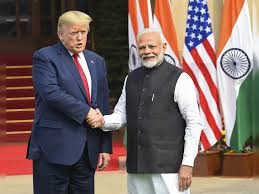
Interestingly, this acquisition is not just a military move but a diplomatic one; analysts suggest the decision to bypass standard offset obligations for this “global route” purchase played a pivotal role in smoothing recent India-US trade negotiations with the Trump administration, which recently saw a reduction in tariffs. By securing these advanced American platforms alongside the French fighters, India is effectively diversifying its strategic dependencies while ensuring it possesses the most sophisticated hardware available for a potential two-front conflict scenario involving China or Pakistan.
Comprehensive Modernization and Local Manufacturing
The scope of this $40 billion package extends far beyond just aircraft. The DAC also cleared significant investments in precision-strike capabilities, including a large order of SCALP and Meteor missiles to arm the expanding Rafale fleet, and the development of Air-Ship Based High Altitude Pseudo Satellites (AS-HAPS) for persistent, space-like surveillance. The Indian Army was not left behind, receiving approval for a new generation of indigenous anti-tank mines and a comprehensive overhaul of its aging T-72 and BMP-II armored fleets.
To further cement the domestic industry, a ₹2,312 crore contract was signed with Hindustan Aeronautics Limited (HAL) for eight Dornier 228 aircraft for the Coast Guard. This broad-spectrum upgrade signals India’s shift from a reactive military posture to one of long-term, proactive preparedness.
By balancing the urgent need for foreign “off-the-shelf” technology with strict “Make in India” manufacturing requirements, New Delhi is attempting to build a future-ready military ecosystem that can deter regional adversaries while simultaneously fueling its own domestic aerospace and defense sectors.
About the Author