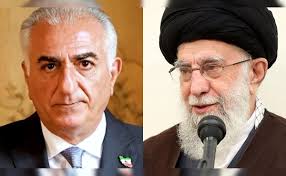
The declaration “I Will Return, the Islamic Republic Will Fall” has become the defining rally cry for Reza Pahlavi, the exiled Crown Prince of Iran, especially during the intensified nationwide protests of 2025 and early 2026.
In his most recent landmark address in Washington, D.C., on January 16, 2026, Pahlavi transitioned from a symbolic figurehead to a leader actively preparing for a “national revival.” His message is built on the conviction that the current theocratic regime has reached a “dead end,” losing its legitimacy not just internationally, but more importantly, in the eyes of the millions of Iranians who have taken to the streets despite brutal repression.
Pahlavi frames the collapse of the Islamic Republic not as a question of “if,” but of “when,” positioning himself as the catalyst for a peaceful transition toward a secular democracy.
His vision for a post-revolutionary Iran is both ambitious and pragmatic, centering on what he calls the “Cyrus Accords”—a proposed expansion of the Abraham Accords that would see a free Iran immediately recognize Israel and normalize relations with the United States. Pahlavi argues that the “real Iran” is a peace-loving, flourishing nation that existed long before the 1979 Revolution and will rise again from the ashes of clerical rule.
To achieve this, he has laid out a 100-day stabilization plan focusing on three core principles: territorial integrity, individual liberties with equality for all citizens, and the strict separation of religion and state. By pledging to end Iran’s military nuclear program and cease support for regional proxy groups, he aims to transform Iran from a “destabilizing force” into a reliable energy supplier and a pillar of global security.
Perhaps his most critical strategy involves a direct appeal to the Iranian military and security forces. He frequently urges them to abandon the regime, stating, “You are the national military of Iran, not the military of the Islamic Republic.
” This call to defect is designed to prevent a civil war and ensure an orderly transition. While he acknowledges the skepticism of some who fear a return to monarchy, Pahlavi maintains that his goal is not a personal grab for power but to facilitate a national referendum where the Iranian people can choose their own form of government.
As the rial plunges and inflation creates an “unbearable reality” for common citizens, Pahlavi’s “I Will Return” sentiment is less about a restoration of the past and more about a promise to be present during the “ultimate battle” for Iran’s future, standing shoulder-to-shoulder with his compatriots to reclaim their dignity and sovereignty on the world stage.
About the Author