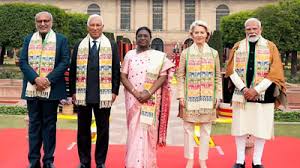

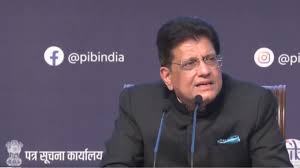
On January 27, 2026, Union Commerce and Industry Minister Piyush Goyal announced a historic milestone in international trade: the conclusion of negotiations for the India-European Union Free Trade Agreement (FTA). Speaking at a joint press conference in New Delhi following the 16th India-EU Summit, Goyal expressed strong optimism that the pact would be implemented within the calendar year 2026. Described as the “mother of all trade deals,” this agreement marks the culmination of nearly 20 years of stop-start negotiations that originally began in 2007. Goyal noted that the “heavy lifting” for this final breakthrough occurred over the last 12 months, fueled by a shared strategic necessity to diversify supply chains and stabilize economic growth amidst global geopolitical fragmentation.
The Implementation Roadmap
To meet the ambitious 2026 deadline, the agreement will now enter an expedited “legal scrubbing” phase. This process involves a meticulous review of the text by legal experts from both sides to ensure consistency and clarity. Simultaneously, the treaty must be translated into all 24 official languages of the European Union—a logistical feat that Goyal assured would be handled on a fast-track basis. Once the legal and linguistic frameworks are finalized, the deal will be presented to the European Parliament and the Indian Cabinet for formal ratification. Goyal emphasized that every trade agreement “stands on its own legs,” dismissing suggestions that the deal was merely a reactive measure to recent U.S. tariff hikes, though he acknowledged it provides a vital “counter-cyclical buffer” for Indian exporters.
Sectoral Impact and Market Access
The FTA is staggering in its scope, covering nearly 99% of Indian exports and 97% of EU exports. For India, the primary beneficiaries are labor-intensive sectors such as textiles, apparel, leather, and gems and jewelry. Currently, Indian exporters in these fields face tariffs of up to 10% in the EU; under the new pact, these will drop to zero immediately upon entry into force. This is expected to unlock approximately ₹6.4 lakh crore ($75 billion) in export potential. Conversely, the EU has secured unprecedented access to the Indian market for automobile components, wines, and spirits, though India has maintained protections for its sensitive dairy and small-car segments through phased tariff reductions and long transition periods.
A Strategic Economic Shield
The agreement creates a combined free trade zone of 2 billion people, uniting the world’s second-largest economic bloc with its fastest-growing large economy. Beyond simple commerce, the deal includes a dedicated Trade and Sustainable Development (TSD) chapter, addressing climate change and labor rights—long-standing sticking points that were finally resolved through “mutual respect for developmental trajectories.” As India aims for a $30 trillion economy by 2047, Goyal framed this FTA as a cornerstone of “Viksit Bharat,” ensuring that Indian MSMEs are seamlessly integrated into global value chains. By removing barriers for nearly $33 billion worth of labor-intensive goods, the pact is projected to support the creation of 6–7 million new jobs in India alone, particularly in rural manufacturing hubs.
About the Author