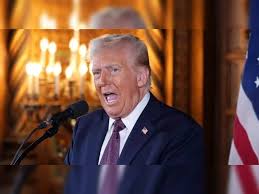
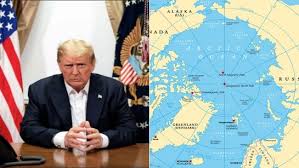
Donald Trump’s renewed and “absolute” interest in Greenland, which reached a fever pitch in early 2026 following the U.S. intervention in Venezuela, is driven by a convergence of high-stakes military, economic, and geopolitical factors that have transformed the world’s largest island from a remote outpost into the “center of the Arctic universe.” At the heart of this fixation is a hyper-realist view of national security; Greenland occupies a vital geographic position between North America, Europe, and Russia, making it the indispensable “front door” for homeland defense.
Specifically, the island is home to the Pituffik Space Base (formerly Thule), which hosts a critical early-warning radar system designed to detect incoming intercontinental ballistic missiles. As Russia expands its Arctic military footprint and China asserts itself as a “near-Arctic state,” Trump has argued that U.S.
“Ownership and control” of the territory is no longer just a real estate ambition but a strategic imperative to prevent the island from becoming a “security black hole” where adversarial submarines and vessels can operate undetected.
This is especially relevant regarding the GIUK Gap (the maritime corridor between Greenland, Iceland, and the UK), a naval chokepoint that is essential for monitoring Russian northern fleet movements and protecting undersea cables that carry the vast majority of trans-Atlantic internet traffic.
Beyond its military utility, the island is a geological goldmine of critical minerals that are essential for the 21st-century economy. Greenland holds some of the world’s largest untapped deposits of rare earth elements—such as neodymium and dysprosium—which are vital for everything from electric vehicle batteries and smartphones to advanced fighter jets and AI hardware.
Currently, China controls over 80% of the global supply chain for these minerals, a dependency the Trump administration views as a massive strategic vulnerability. By gaining jurisdiction over Greenland, the United States would effectively break the Chinese monopoly on the “vitamins of modern industry,” securing a domestic supply chain for the energy transition and future defense technologies.
Furthermore, as the Arctic ice sheet continues to melt at an unprecedented rate, new trans-Arctic shipping routes like the Northwest Passage and the Transpolar Sea Route are becoming viable, potentially slashing travel times between Asia and Europe by weeks and bypassing traditional chokepoints like the Suez Canal.
Control over Greenland would grant the U.S. a dominant seat at the table in managing these emerging “Polar Silk Roads” and the vast offshore oil and gas reserves that become accessible as the ice recedes.

However, this “absolute” desire has created a massive diplomatic rift with Denmark and the autonomous government in Nuuk. While Trump has frames the acquisition as a way to “make Greenland rich” and free it from Danish subsidies, the Greenlandic people and Prime Minister Jens-Frederik Nielsen have responded with a firm “nothing about us without us,” asserting their right to self-determination and labeling talk of annexation as “disrespectful” and “absurd.
” The appointment of Louisiana Governor Jeff Landry as a special envoy to Greenland in December 2025 further signaled that the administration is treating the island as a territory to be managed rather than a partner to be consulted.
The tension escalated significantly in January 2026 when Trump refused to rule out the “use of force” or economic coercion to secure the island, suggesting that the recent military operation in Venezuela served as a template for “securing American interests by any means necessary.”
This has left the international community, including NATO allies, in a state of alarm, as the pursuit of Greenland now tests the very foundations of the rules-based international order and the principle of national sovereignty in the high north.
About the Author