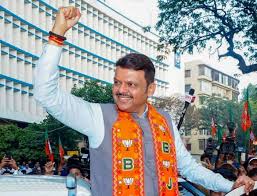

The declaration by Chief Minister Devendra Fadnavis on January 16, 2026, that the Bharatiya Janata Party (BJP) has emerged as the largest political force across the urban, semi-urban, and rural landscapes of Maharashtra marks a historic realignment in the state’s power dynamics. Speaking from the BJP headquarters at Nariman Point following a landslide victory in the 2026 civic and local body elections, Fadnavis framed the results as a comprehensive “social and geographic
. The data from the State Election Commission (SEC) bolsters this claim, showing the BJP winning a staggering 1,425 seats out of the 2,869 contested across 29 municipal corporations. This “momentous victory” saw the BJP-led Mahayuti alliance secure control over 25 of the 29 corporations, effectively dismantling the decades-old dominance of regional satraps. In the urban heartland, the most symbolic victory was recorded in the Brihanmumbai Municipal Corporation (BMC), where the BJP and Eknath Shinde’s Shiv Sena ended the three-decade-old hegemony of the Thackeray family, bagging 118 out of 227 seats.
This urban dominance extended to other major metros, with the BJP clinching 119 seats in Pune, 102 in Nagpur, and 72 in Nashik, proving that the party’s infrastructure-heavy “development agenda” has resonated deeply with the aspirational middle class and city dwellers.
Beyond the metropolitan hubs, Fadnavis highlighted the party’s unprecedented penetration into the semi-urban and rural pockets, traditionally considered the strongholds of the Nationalist Congress Party (NCP) and Congress. In the December 2025 phase of the elections, the Mahayuti alliance had already delivered a “crushing blow” to the opposition Maha Vikas Aghadi (MVA) by sweeping 207 out of 288 municipal councils and nagar panchayats.
This performance in the semi-urban “nagar palikas” indicates a significant shift in voter behavior, where even in smaller towns, the electorate has prioritized the “triple-engine” governance model of the BJP, Shinde’s Sena, and Ajit Pawar’s NCP over regional identity politics. Fadnavis noted that this mandate is a rejection of the “politics of caste and language” in favor of transparency and progress, and he attributed credit for it to the visionary leadership of Prime Minister Narendra Modi. By winning power in places as diverse as Navi Mumbai, Jalgaon, and Chhatrapati Sambhajinagar, while also making deep inroads into the underdeveloped Marathwada and Vidarbha regions, the BJP has successfully positioned itself as the “only pan-Maharashtra party.”
The Chief Minister’s rhetoric emphasized that “development and Hindutva cannot be delinked,” arguing that the party’s “broad-minded and all-inclusive” Hindutva has reached the “ordinary people” across all economic strata.
This strategy appears to have successfully neutralized the opposition’s narrative; for instance, the BJP stunned the Pawar family in their own bastions in Pune and Pimpri-Chinchwad, leaving the NCP (SP) and Congress with only marginal presence.
The inclusion of women and youth voters was cited as a critical factor, with Fadnavis pointing to a “silent wave” of support for welfare schemes like the Majhi Ladki Bahin initiative, which bridged the gap between rural hardships and urban aspirations.
As the dust settles on this 2026 verdict, Fadnavis has signaled that this is not just a win for a coalition, but a mandate for a “New Maharashtra” that is no longer fragmented by regional loyalties.
The party’s ability to remain the single-largest entity in 19 major corporations and hundreds of smaller councils ensures that the BJP now holds the keys to every tier of governance in the state, from the local gram sabha to the state assembly.
About the Author