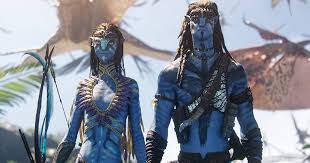

The highly anticipated arrival of James Cameron’s Avatar: Fire and Ash at the Indian box office on December 19, 2025, has encountered unexpected turbulence that has shifted the industry’s opening day narrative. While trade analysts initially pegged the third installment of the sci-fi epic for a roaring start of ₹30 crore or more, those hopes have significantly cooled, with revised estimates now hovering in the ₹18–22 crore range.
This projected dip is particularly striking when contrasted with the performance of its predecessor, Avatar: The Way of Water, which debuted to a massive ₹41 crore net in India in 2022. The primary catalyst for this downward revision is what trade experts are calling the “Dhurandhar Effect.”
Directed by Aditya Dhar and starring Ranveer Singh, the espionage thriller Dhurandhar has emerged as an unstoppable cinematic juggernaut.
Entering its third week, the film has already shattered records, grossing over ₹550 crore in India and eyeing the elusive ₹1,000 crore global mark.
Its second week was historic, actually outperforming its first week—a feat almost unheard of for a high-budget blockbuster—and this sustained momentum has created a massive bottleneck for screen availability. In major circuits, particularly in North India, exhibitors are finding it difficult to displace Dhurandhar to make room for Pandora.
Legendary theaters like Mumbai’s Gaiety-Galaxy have reportedly opted to skip the Hollywood biggie entirely in favor of continuing the Ranveer Singh-starrer, citing the domestic film’s overwhelming demand and steady 40%+ night occupancy.
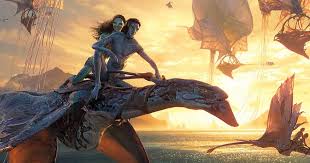
Beyond the competitive pressure from local cinema, the “Avatar Fatigue” factor is also being scrutinized as a legitimate concern. Unlike the 13-year wait that fueled the organic hype for the second film, Fire and Ash arrives just three years later.
This shorter gap seems to have diluted the “event” status of the franchise, as the novelty of the underwater motion-capture and 3D technology—while still spectacular—no longer feels like a once-in-a-decade revolution.
Additionally, while The Way of Water was a commercial behemoth, it faced minor criticism for its bloated runtime and repetitive narrative beats; early reviews for the third film have echoed these sentiments, with some critics noting a lack of fresh curiosity compared to the previous entries.
Advance bookings reflect this cooling interest, with ticket sales at national chains trailing roughly 60% behind the pace set by the 2022 release.
While the English and South Indian dubbed versions (Tamil and Telugu) remain relatively strong, the Hindi-speaking belt is heavily favoring the grounded, high-stakes nationalist fervor of Dhurandhar.
The conflict over IMAX screens has seen Avatar take the lead, but in the single-screen and Tier-2 markets that drive massive volume, the “Dhurandhar wave” has effectively cannibalized the potential audience for James Cameron’s latest vision.
However, it would be premature to dismiss the film entirely, as the Avatar franchise is famously known for its “long legs” rather than explosive openings.
James Cameron’s films typically rely on sustained word-of-mouth and repeat viewings over several months.
While a sub-₹25 crore opening might look like a “soft” start for a film of this magnitude, the holiday season and the lack of other major Hollywood competition in the coming weeks could allow Fire and Ash to stabilize.
The real test will be whether the visual spectacle of the “Ash People” and the new volcanic landscapes of Pandora can win over audiences who are currently enamored by Ranveer Singh’s gritty portrayal of Jaskirat Singh Rangi.
As the box office stands on the brink of this massive clash, the “Dhurandhar Effect” serves as a reminder of the growing power of well-executed domestic content to challenge even the most formidable global franchises.
About the Author