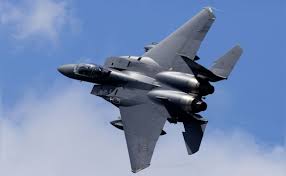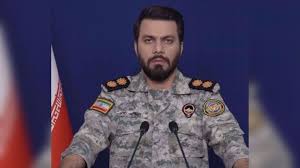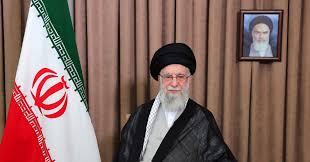
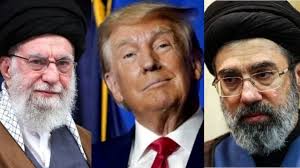
In a geopolitical landscape that feels increasingly like a high-stakes game of “deal or no deal,” the reports emerging from Washington in February 2026 suggest that President Donald Trump has been presented with a “menu” of military options that would have been unthinkable just a few years ago. At the heart of these deliberations—highlighted by recent reporting from Axios and the Wall Street Journal—is the explicit possibility of targeted strikes designed to “take out” Supreme Leader Ali Khamenei and his son, Mojtaba Khamenei.
“decapitation strike” strategy isn’t just a sudden whim; it is the culmination of a year of escalating tension following the Israeli and American strikes on Iranian nuclear facilities in mid-2025 and a subsequent “maximum pressure” campaign that has brought the Iranian economy to the brink of total collapse.
The atmosphere in the Oval Office is described as one of calculated ambiguity, with the President recently setting a 10-day deadline for Tehran to accept a “meaningful” nuclear agreement—one that might permit “token” uranium enrichment but demands a total cessation of ballistic missile development and regional proxy support.
For Trump, the framing has shifted from traditional regime change to a “rescue mission” for the Iranian people, who have been embroiled in massive, nationwide protests since late December 2025. These demonstrations, sparked by soaring inflation (with the Rial trading at over 1.4 million to the dollar) and a brutal government crackdown that has reportedly claimed over 5,000 lives, have provided the moral and political cover for the Pentagon—which Trump often refers to as the “War Department”—to prepare for more than just surgical strikes on infrastructure.
The logic behind targeting Mojtaba Khamenei is particularly strategic; as the perceived successor and current gatekeeper to his 86-year-old father, his removal would effectively decapitate the regime’s continuity and potentially spark a total collapse of the clerical establishment’s authority. While some senior advisors, including Secretary of State Marco Rubio and Defense Secretary Pete
Hegseth has emphasized that a full-scale air campaign might not guarantee a regime collapse without ground intervention. The “decapitation” option is viewed as a way to fulfill Trump’s promise to punish the regime for its domestic brutality without entangling the U.S. in another “endless war.” Meanwhile, the “massive armada” of the U.S.
Carrier strike groups continue to mass in the Persian Gulf, serving as a psychological weight intended to force a “deal of the century” that would see Iran effectively surrender its nuclear ambitions.
Tehran, for its part, has warned of a “regional war” and hinted at preemptive strikes against U.S. bases or Israel, yet the reported contingency plans for Khamenei to flee to Moscow suggest a leadership that feels the walls closing in. As we approach the end of February 2026,
the world is watching to see if Trump will pull the trigger on a strike that would rewrite Middle Eastern history or if this is the ultimate “art of the deal” bluff intended to secure a legacy-defining diplomatic victory.
The stakes couldn’t be higher, as a miscalculation on either side could ignite a conflict that stretches from the Levant to the Strait of Hormuz, yet the President remains characteristically unpredictable, telling reporters at his Board of Peace meeting that “maybe we’re going to make a deal, maybe not,” leaving both the mullahs in Tehran and the international community in a state of breathless suspense.
About the Author