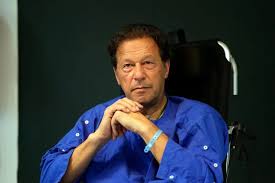
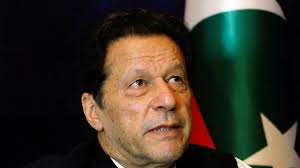
On Sunday, February 15, 2026, a high-profile medical standoff unfolded at Rawalpindi’s Adiala Jail as a five-member team of government-appointed doctors arrived to examine former Prime Minister Imran Khan. This emergency inspection, ordered by the Supreme Court of Pakistan, came in response to alarming reports that the 73-year-old leader had lost approximately 85% of the vision in his right eye.
The medical team—which included prominent specialists such as Dr. Nadeem Qureshi from Al-Shifa Trust and Dr. M. Arif from the Pakistan Institute of Medical Sciences (PIMS)—spent over an hour conducting a detailed ophthalmic evaluation and collecting blood samples.
Their subsequent report confirmed significant medical distress, identifying “moderately dense retinal hemorrhages” and “cotton wool spots” consistent with Central Retinal Vein Occlusion (CRVO), a condition the party claims resulted from nearly 900 days of medical neglect and solitary confinement.
Despite the technical depth of the examination, the Pakistan Tehreek-e-Insaf (PTI) and Khan’s family immediately and categorically rejected the inspection, branding it a “malicious” and “symbolic” exercise designed to obfuscate the truth.
The party’s core grievance lies in the exclusion of Khan’s personal physicians, Dr. Faisal Sultan and Dr. Aasim Yusuf, as well as his family members, during the procedure. Khan’s sister, Aleema Khanum, voiced fierce opposition, questioning why the administration displayed such “fierce resistance” to the presence of independent observers if there were nothing to hide.
The PTI maintains that any medical report produced under the exclusive control of the state is “manufactured” and lacks legal or moral validity. They have instead demanded that Khan be immediately transferred to Shifa International Hospital in Islamabad for a comprehensive, multi-disciplinary evaluation.
This medical controversy is more than a health update; it is a flashpoint in the ongoing political friction between the incarcerated leader and the current administration. While government officials have attempted to downplay the severity of the vision loss—suggesting that with corrective lenses, his vision is manageable—the PTI views this as a life-threatening breach of fundamental human rights.
As an opposition alliance continues its sit-in at Parliament House to protest his treatment, the standoff highlights the deep-seated mistrust defining Pakistan’s political landscape. The outcome of this medical dispute now hinges on whether the state will yield to the Supreme Court’s broader directive to allow Khan access to his personal doctors, or if the “technical floor” established by the government board will remain the final word.
About the Author