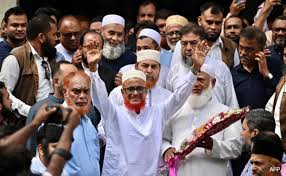
As Bangladesh prepares for national elections on February 12, 2026, a significant shift in U.S. foreign policy has emerged, potentially straining the “consequential partnership” between Washington and New Delhi. Recent reports, including a detailed exposé by The Washington Post on January 22, reveal that U.S. diplomats have been actively engaging with Jamaat-e-Islami (JeI), Bangladesh’s largest Islamist party. Once banned under the ousted Sheikh Hasina government, Jamaat is now polling as one of the most popular political forces in the country. This “woo’ing” of an Islamist group—which historically opposed Bangladesh’s 1971 independence and maintains a pro-Pakistan tilt—marks a pragmatic, if controversial, pivot by the U.S. State Department to ensure influence regardless of the election outcome.
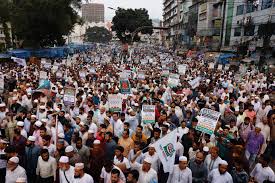
For India, this outreach is deeply unsettling. New Delhi has long viewed Jamaat as a radical, anti-India entity and a threat to regional stability. The concern is that a Jamaat-influenced government would not only pivot away from India toward China and Pakistan but also jeopardize the safety of Bangladesh’s Hindu minority, who have already faced increased violence since the 2024 uprising. Analysts like Michael Kugelman of the Atlantic Council suggest this could “drive a wedge” between the U.S. and India at a time when bilateral ties are already stressed by trade disputes and 50% tariffs imposed by the Trump administration on Indian goods.
Washington’s defense of this engagement rests on “routine diplomacy” and the belief that they hold significant economic leverage. U.S. However, India remains skeptical, viewing the U.S. stance as a gamble that prioritizes short-term democratic optics over long-term security interests. As the election nears, the divergence in how D.C. and Delhi perceive the “Islamist turn” in Dhaka is becoming a primary flashpoint in South Asian geopolitics, testing whether their strategic partnership can survive such a fundamental disagreement in their immediate neighborhood.
About the Author