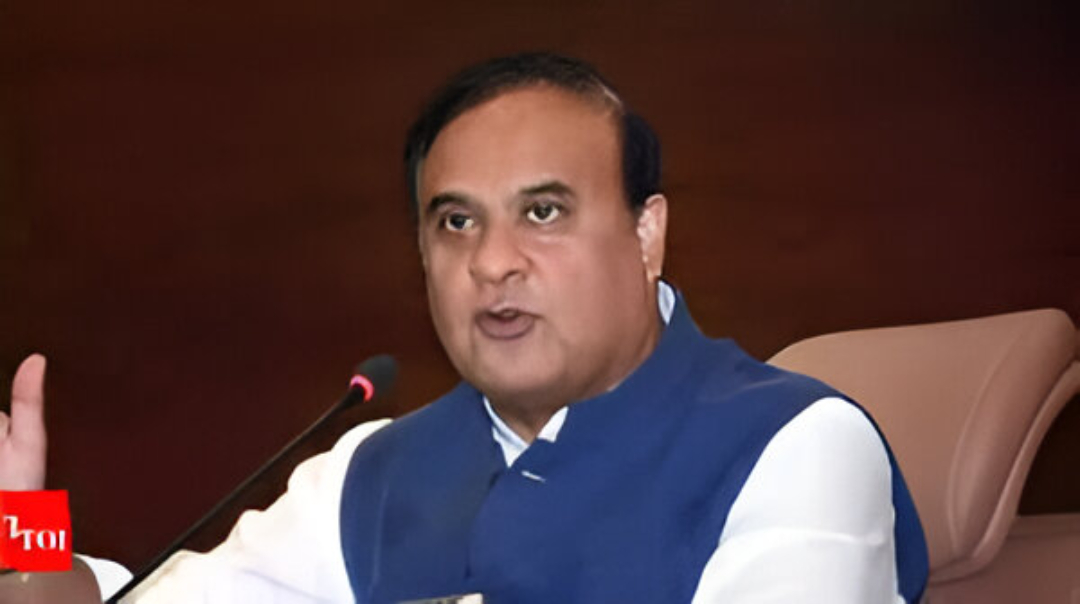
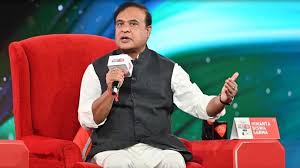
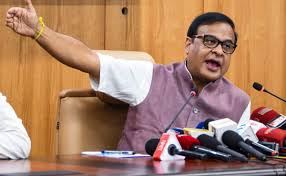
The statement by Assam Chief Minister Himanta Biswa Sarma, “Rs 10,000 or Rs 1 lakh, a Muslim voter will never choose me,” which was made at the Agenda Aaj Tak 2025 conclave, has ignited a significant national debate regarding electoral politics, identity, and the transactional nature of welfare schemes.
This assertion was made in response to a question drawing a parallel between his governance style and welfare politics in other states, specifically asking if he would adopt a scheme similar to Bihar Chief Minister Nitish Kumar’s, which involves transferring money to women to garner electoral support.
Sarma categorically dismissed the applicability of such a strategy to a significant portion of Assam’s Muslim community, often using the term ‘Miya Muslim’—a controversial term frequently applied to Bengali-origin Muslims in the state—to specifically define the segment he was referring to. His central argument was that the ‘Miya Muslim’ vote is fundamentally driven by an ideological opposition to the BJP’s politics and not by material incentives or development initiatives.
He claimed that even if he offered a substantial amount like one lakh rupees, this community’s vote would remain committed to rival parties, suggesting a deep, unshakeable ideological divide that transcends the benefits of government welfare and infrastructure projects.
To dramatically illustrate this point, Sarma even recounted an anecdotal exchange, claiming that some members of the community he had helped told him they would “give [their] kidney but not vote” for him, portraying the relationship as one of development without electoral quid pro quo.
This remark is significant because it encapsulates a core theme of the BJP’s political strategy in Assam and its broader Hindutva ideology, which often draws a sharp distinction between different segments of the Muslim population.
Sarma has frequently differentiated between ‘indigenous’ or ‘local’ Assamese Muslims, whom he claims support the BJP, and the ‘Miya’ or immigrant-origin Muslims, who he alleges are aligned with a particular brand of ‘vote bank’ politics orchestrated by opposition parties like the Congress and AIUDF.
By explicitly stating that the development work—such as the creation of colleges and infrastructure in Muslim-majority areas that his government claims to be undertaking—is delinked from the expectation of political returns, Sarma frames his administration’s actions not as ‘appeasement’ but as a matter of constitutional duty.
This narrative serves a dual purpose: it reassures the core Hindu electorate, whom the BJP actively consolidates by continuously highlighting the theme of ‘demographic change’ and ‘threat’ from the immigrant-origin Muslim population, and simultaneously challenges the opposition’s reliance on what he terms identity-based electoral mobilisation.
The context of the remark is further coloured by Sarma’s recurrent focus on controlling the population growth of the migrant Muslim community and curbing practices like child marriage and polygamy, which he presents as vital steps to ‘save’ Assamese culture and demography.
Critics, however, view Sarma’s repeated pronouncements as a form of divisive rhetoric that institutionalises discrimination and further polarises the state along religious and ethnic lines.
They argue that by openly writing off a substantial minority group as electorally unattainable due to fundamental ideological differences, he justifies policies and political discourse that exclude or target that community, making them feel like second-class citizens

Furthermore, it allows the government to sidestep accountability for winning the votes of this community, effectively creating a political environment where the focus remains on development for a particular segment of society while actively challenging the legitimacy and voting patterns of another.
The controversy surrounding this statement therefore goes far beyond a simple political calculation; it is a profound reflection of the complex interplay between identity, welfare politics, electoral consolidation, and the continuing debates over citizenship and belonging in a demographically sensitive state like Assam.
This bold declaration highlights a political strategy that prioritizes ideological alignment over transactional politics, asserting that the battle for Assam is fundamentally one of competing worldviews rather than mere economic incentives, thereby locking in the loyalty of his base while defining the opposition as permanently ‘othered
About the Author